Showing posts with label Affecting Albums. Show all posts

Tuesday, 28 June 2016

Affecting Albums - Come Home for Autumn by Anthony Atkinson

Come Home for Autumn by Anthony Atkinson

Candle Records   2003

(If you have a Spotify account, clicking on the links in the song titles will take you to that track)

Candle Records flickered out somewhere about 2007, and what a loss to Indie Pop it was. The Melbourne-based label was home to artists such as The Lucksmiths, Darren Hanlon,, The Mabels, The Guild League, The Small Knives, and the list goes on. Each of these acts were lyrically rich, and produced fantastic pop tunes that can rapidly become tunes to live your life by as you can't help humming them again and again.

One of the stalwarts of the label was Anthony Atkinson, both as a solo performer and with The Mabels. Come Home for Autumn was his first solo album, and what a great debut it was.

Ranging from very spare guitar to rock tinged with feedback, each song takes us on a journey into love, work, and life in the inner city in the early 2000s.

Atkinson's delivery is often laconic, and his at times ironic lyrics, merging sometimes into lament, are showcased on "City of Crime", with it's wonderful slightly drunken summer afternoon drum beat and strumming, finishing with guitar picking into the sunset.....

"Sidestep" is a wonderfully simple sung duo on the difficulties of communication between men and women, underlain again by guitar.

The highlight for me from this album though is the rock-out track "Rediscover Me", with its simple pounding rhythm and feedback inspired guitar and lyrical fantastic-ness -

"Don't stay in London
Come home for Autumn
Like the trees,
I promise to be at my best

And I'm a firm believer
That our team's the season's sleeper
And I wanna know
Are you comin home for the parade
I wanna know will you be standing with me?"

........................

"But still I wait
Until you're over overseas
And I wait
For you to re-discover me"

This record is a little gem, and yet again a lesson in the truism that simpler is often better when it comes to pop music.

Worth re-discovering!

Come Home for Autumn is available on iTunes, Spotify, and from Plastic Viking Helmet Records, who also stock many other ex-Candle Records artists.


Cheers for now, from
A View Over the Bell

Tuesday, 7 February 2012

Affecting Albums - Snappy Too - James Morrison

Snappy Too - James Morrison

(Links on tracks take you to Spotify to have a listen)

For those of you who are musicians, you have no doubt had the experience of playing in a band and not enjoying how one of the other players has played a part - be it that they can't nail it, or their feel is all wrong. You privately seethe, or you might have a chat to them about it, but that's about all you can do - unless you're James Morrison. Then you can have a 17 piece big band that plays exactly how you want it, because (apart from the drummer) all the musicians are you!

James Morrison will need no introduction to many readers - an Australian Jazz musician of wonderful proficiency across a wide range of styles and instruments, who plays gigs ranging from concerts with Brass Bands through to bop in smokey basements, there is almost nothing he hasn't done since his first professional gig in his teens.

In 1990, with the help of three friends Jeff Hamilton (drums), Ray Brown (bass), and Herb Ellis (guitar), he recorded an album of big band pieces, where he (Morrison) played all the piano, brass and woodwind parts - this album was entitled Snappy Doo. As he writes on the liner notes of the album under review, he always had in his mind that he would one day record another album along the same lines - and with Brown and Ellis now unfortunately no longer with us, Morrison himself has taken up guitar and bass, and, along with Jeff on drums, Snappy Too is now with us.

The album is a collection of original pieces (written by Morrison) and standards such as All of me, Up a Lazy River, and Someday my Prince Will Come. This last piece is played on a Bass Trumpet designed by Morrison and built by the craftsmen at Schagerl brass instruments. Morrison also plays another of his designs, a rotary-valved trumpet with a piston-trumpet length lead pipe called The Raven, in Zog's Jog, which is a wonderful high energy big-band showpiece. This makes Morrison the Jack Brabham of musicians in my opinion (and with Morrison being an absolute motor-head, I'm sure he'd understand the allusion).

The initial "wow" factor of Morrison playing 16 instruments soon wears off as the album gets going. Morrison is such an exciting and energetic player that you find yourself relishing the music and forgetting how it's made, which is as it should be. High trumpet playing is what Morrison is known for, and there is plenty of top-notch screaming, but what is noticeable in a few of the pieces here, such as my personal favourite The Call, is his fine sense of building a solo, from a sometimes low and soft start, building the energy and excitement to a fever pitch before the rest of the "band" kicks in with a killer riff.

As expected, the trombone playing is top notch, but another highlight for me is No Regret, a slower moodier piece, where Morrison solos on tenor sax and sounds very Stan Getz-ish. Nice.

For a change from the classic big band style Sad Blues uses a trad-jazz line up of trumpet, trom, clarinet, banjo and washboard, with plenty of flutter-tongued and plunger-muted trumpet to add to the trad feel.

If you like Jazz, if you like exciting playing, if you like Big Band music, and if you like music that SWINGS, then Snappy Too is well worth checking out.

Snappy Too is available via iTunes, or direct from www.jamesmorrison.com (where he also has a clever video clip of Zog's Jog)


Cheers for now, from
A View Over the Bell

Monday, 19 September 2011

Affecting Albums - What Makes Sammy Swing! - Clark Terry Septet

(Click on the links in the song titles to be taken to Spotify for a listen)

If you are in any way a serious trumpet player, you will have heard of Clark Terry, even if it's only because the well known trumpet maker Olds released both a Clark Terry trumpet and Clark Terry flugelhorn, both of which are now highly prized by collectors.

Of course, to get to a stage where you get a horn named after you means that you are a pretty good player, and Clark certainly was that - after an apprenticeship with the likes of Count Basie and Duke Ellington, he moved out under his own name and has been a big name in the world jazz scene for more than 60 years.

What makes Sammy swing! was recorded in 1963 and features, apart from Clark, Phil Woods and Seldon Powell on reeds (including sax, flute and clarinet), Urbie Green on trom, and a rhythm section composing Dave McKenna on piano, George Duvivier on bass and Mel Lewis on drums.

The tunes were arranged by Pat Williams, and they are all from a Broadway musical called What makes Sammy run?, which opened in 1964. According to Terry (in the original liner notes of the album), the group had not seen the arrangements before heading into the studio - and the freshness with which the septet approaches the music shows through.

When I first heard this album, I had to check that it was only a septet, as the orchestration sounds very full, which I guess is courtesy of the Broadway roots of all the songs - there is plenty of great ensemble playing here.

Stand-out tracks are the first, A room without windows, with it's driving trom - bass clarinet lines, and great plunger trumpet tune over the top, with excellent piano filling in the spaces (a feature of the whole album). There are some slightly Broadway-esque (read cheesy), bits in here, but because the group swings so hard, they make it good - Terry's absolutely wailing solo to take out this tune is fantastic.

A new pair of shoes begins with a Miles Davis like muted trumpet/trom line, which morphs into a neat little muted line with the piano lifting it with swinging fills. The whole tune opens out as it moves along, with a nice sax solo taking it out at less than three minutes. In fact all the tunes here are pretty much less than four minutes, so the band has to make the most of what they've got in short time - the fact that they managed to do that is testament to their individual skills.

The best track on the album for mine is Humble, with it's merry falling melody line, packing in a few musical cliches, that bring even more smiles. The middle of the tune is filled with a fine swinging tenor sax solo and some great flugel work by Terry. Just a magnificent foot-tapper.

This album is certainly not a profound musical statement, nor is it ground-breaking in any way, but for some excellent jazz, I'd recommend you suss it out.

What makes Sammy swing! is available on iTunes and from Amazon. If you snag the LoneHillJazz version (which is on iTunes), it comes with 12 bonus tracks, some of which are live recordings of Clark Terry small group sessions in Paris, and others which come from the soundtrack of a French film Si le vent te fait peur.


Cheers for now, from
A View Over the Bell

Monday, 9 May 2011

Affecting Albums - Endangered Species - Galapagos Duck

Galapagos Duck would be counted as one of Australia's best-known jazz bands (which may not be saying that much, in truth). With a constantly changing personnel, they have been in existence since 1969, when the original members got together to play some gigs in the NSW snowfields during ski season.

Since then the band has travelled a long musical road through most spectra of the jazz idiom, owing to the eclectic strengths of various members of the band. Their sound is unique, partly owing to their wide-ranging use of idiom, and the fact that over time most members of the band have been multi-instrumentalists, which means that in any one night or recording the line-up of instruments can change from tune to tune.

Endangered Species was released in 1985, in aid of the World Wildlife Fund. I suppose in some ways it could be termed a concept album, in that the songs are about specific endangered species, or wildlife in general, with one song about the Greenpeace organisation.

As with most albums created around a concept, there are high points and low points in this recording. In fact quite often it is the grooves that stand out, rather than the tunes as a whole. The riff in Hindsight is very catchy, the groove in China Bear is good, (the lyrics aren't!), Living Planet has a great funk feel, and Grizzly Bear is a classic R'n'B type groove.

There are also some tunes here that hark back to traditional jazz, Wombat Walk being one of them. All the instrumentalists are top notch, with especially good trombone playing - in fact a few of the tunes feature a frontline of trombone and tenor sax, which perhaps shouldn't work as well as it does, given they are playing in the same voice.

The album is let down by it's lyrics - four tunes are sung, and the lyrics are trite, which is a shame, as they make this album less than the sum of it's parts.

The reason I've included this album is here is that it is a great introduction to jazz - many styles are here, the improvisation is good and easy to follow, and the grooves get into your head.

Unfortunately at the time of writing this post Endangered Species is not available except on the second-hand market, which is a shame, as it is an interesting document of Australian Jazz.


Cheers for now, from
A View Over the Bell

Tuesday, 29 March 2011

Affecting albums - Submarine Bells - The Chills

(Click on the links in the song titles to be taken to Spotify for a listen)

The Chills were and are a band that never quite made it. With the only  constant in a constantly changing line-up being Martin Phillipps, the band struggled for traction, with stability being hard to come by with Phillipps' struggle with addiction and hepatitis adding to the strain of changes of personnel.

The output of the band in terms of recorded work has, therefore, been somewhat limited over the years - it took seven years for the band to release it's first LP,  and their output to date is limited to four albums, and about as many EPs.

The album under review here was the band's second, released in 1990, and reached No. 1 on the NZ charts, and did quite well in other markets, but wasn't the huge smash that I think was hoped for.

There are some absolute pop gems here - Heavenly Pop Hit being the prime example. A fantastic organ chime theme runs through the song, and the dream like lyrics culminate in the line "It's a Heavenly Pop Hit if anyone wants it". This insecurity of the worth of his work runs through Phillipps' songs on this album:  In Oncoming Day, he sings -

"I think of words to tell you
I find nothing fine enough to say.
Nothing worth anything,
Nothing worth nothing,
Nothing left in this lump of grey,
That even vaguely says I love you,
In a way that pleases me.
So I'll let the oncoming day say it for me"

This, in a song that is one of the most lyrically beautiful songs you might hear, says a lot about the state of mind of the writer. The music to this song fits the worlds very well - a driving insistent beat and rhythmic guitar driving the song, just as Phillipps is driving himself in the lyrics to beat the oncoming day and produce something worthwhile. Of course he doesn't need to worry - he has.

Many of Phillipps' songs are to do with the world, and his seeming belief that pop has the power to change it - Singing in my Sleep, with it's wonderful bouncing rhythm and bell-like riff, is one of those songs, and the fine ending lyric "Singing in my sleep songs of such beauty and sadness, Earth's emotions encaptured, but the songs fade away when I wake".

There are harder edged moments on this album - Familiarity Breed Contempt shows Phillipps in a darker mood, with the music to match - "Hard people make hard times far worse, not the reverse", with an almost shouted verse line and wall of sound building up to the biting final line "Familiarity breeds contempt - and I'm not exempt", a fine end to a pop jeremiad against cynics and idiots.

There are delicate gems on this album as well - Don't be - memory is a plaintive song about lost love, where really the title says it all - wonderful minor-key vocals, and a sparse chorus lending a sadness that lingers after the final chord.  There is some other beautiful vocal harmonic work on this album as well, I Soar being perhaps the best example - a song where simplicity creates beauty.

The final masterpiece is the song that gives the album it's name. Submarine Bells is another song about love, and is a wonderful, dreamy, evocation of the beauty of the moment.

I've surprised myself with how much I realise I love this album - every song is a winner, and it's a shame that The Chills didn't get wider airplay, and that they've released such a limited amount of material. I highly recommend this album.

Submarine Bells is available via iTunes, or Amazon.


Cheers for now, from
A View Over the Bell

Tuesday, 15 March 2011

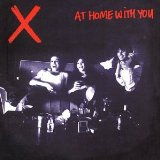
Affecting Albums - At Home With You - X

(Click on the links in the song titles to be taken to Spotify for a listen)

Ian Rilen, Steve Lucas and Cathy Green made up what was, for this reviewer, the definitive line-up of the iconic Aussie punk band X. Formed in 1977 by former Rose Tattoo bass player Rilen, X was known around the country as a hard rockin' live act - I remember one performance at the Prince of Wales Hotel in St. Kilda where Lucas got a nasty electric shock from his guitar - the reason being the crowd was "going off" to such an extent that their combined heat caused it to "rain" inside! For the record, Lucas finished the set, although obviously in a bit of pain - that's showbiz!

At Home With You, released in 1985, was the second album from X, after the 1979 release X-Aspirations. The album shows two sides to the band - the hard and fast and dirty punk sound that they were known for in their live act was certainly there, but there were also some softer songs, some with horns, which show that X was definitely not a one-trick-pony.

The highlight of the album for this reviewer is Degenerate Boy, a celebration of sorts of the (low) life of rock and roll, sex and drugs included. Ian Rilen's backup vocals add a touch of evil delight to such lines as "last week's dole cheque, up my arm it went". He was indeed a deeply dirty degenerate boy.

Other hard rockin' songs are the opening tune The Feel, with it's harsh guitar line and horn line, the thrashy Oxford St. Nick and Going Crazy showing why X has become an influence to many newer bands.

What is perhaps more surprising on this album are the more "straight-ahead" tunes - despite the throaty vocals and fast ending, Moving On is a classic pop song structure, All Over Now is a great rock tune, and Don't Cry No Tears is a moving love song, with a wonderfully haunting French Horn figure adding what could even be called beauty to this track.

There are some really great moments on this album - great songs, great licks, and great horns. Check it out.

At Home With You is available from iTunes in the original version, or a version with bonus tracks, or from Aztec Records, which is re-releasing lots of Australian Music from the 70s and 80s


Cheers for now, from
A View Over the Bell

Thursday, 24 February 2011

Affecting Albums - Warehouse: Songs and Stories - Husker Du

(Click on the links in the song titles to be taken to Spotify for a listen)

Husker Du were one of those "nearly but not quite" bands, whose reputation has continued to blossom long after their demise. Formed in Minnesota in the late 70s, by the late 80s they'd ceased to exist, but thankfully left a rich vinyl legacy for us to revel in.

They were one of the first underground acts to be signed by a major label, and although they didn't get the success they were after (or that they deserved), they paved the way for the transition of the alternative sound to the mainstream arena, along with other bands such as REM.

They are thought of by many as a punk / post-punk outfit, and while that was true for their early work, they quickly developed a keen melodic sense and pop feel, which sat just underneath their "wall of guitar" sound. Along with such other magnificently titled albums as Zen Arcade, Candy Apple Grey, and Flip Your Wig; Warehouse: Songs and Stories is a collection of fine pop and rock and roll tunes.

Warehouse was the last release from the band, as the tension between the two major songwriting talents in the unit, Grant Hart and Bob Mould had, by that stage, become unsustainable (the other member of the band, bassist Greg Norton did not write songs for Husker Du).

Perhaps because this was the band's final act, Warehouse comes in at a weighty 20 tunes, which makes it good value from the off - that a sizeable number are very good, and that a few are the best songs the band released, are the icing on the cake.

Fans familiar with Mould's later band Sugar will recognise the guitar sound on this album immediately - it's HUGE - which means this three piece never feels thin on the ground.

The many stand out songs on this album are headlined by Could you be the One?, a very catchy tune, with typical Bob Mould lyrics of personal confusion. Other great Mould penned tunes are Standing in the Rain, Ice Cold Ice, which has a great chorus, and Friend, You've Got to Fall, with it's great falling chorus melody that echoes the song's title.

Grant Hart kicks in with some pearlers to - Charity, Chastity, Prudence, and Hope, and You're a Soldier, with it's searing commentary ("...Can you tell me just how many did you kill today?"), Too much Spice, and She Floated Away, which is almost a folk song.

These few are just the highlights for me of the 20 tunes on this disc - so if you're interested in finding out more about a band that links punk to alternative rock, Warehouse: Songs and Stories is a fine entree into the world of Husker Du.

Warehouse: Songs and Stories is available from iTunes or from Amazon


Cheers for now, from
A View Over the Bell

Friday, 4 February 2011

Affecting albums - Blue Valentine - Tom Waits

(Click on the links in the song titles to be taken to Spotify for a listen)

Tom Waits is a man of many talents. Singer, songwriter, multi-instrumentalist and sometime actor, he has created a musical world all his own, which can be weird and wonderful at times. Even if you haven't heard him, you may have heard some of his songs sung by others, such as Jersey Girl or Downtown Train.

Tom Waits has a bit of a cult following, and I am a devotee - at last count I had 11 of his albums nestling in my iPod. Which brings me to the subject of this post - Blue Valentine.

In some ways this is the easiest entree into the world of Tom Waits and his music - Blue Valentine, while definitely quirky, is not quite as eccentric as some later albums - indeed it begins with a lushly orchestrated version of Somewhere, from West Side Story. The first indication that this might be something different is when you hear Tom's gravelly, husky voice - with a sound somewhere between Louis Armstrong and a lion's roar.

The rest of the album is a mix of bluesy tunes, and songs with a strong narrative lyric, such as Red Shoes by the Drugstore, Christmas Card from a Hooker in Minneapolis$29.00, and Romeo is Bleeding. These songs evoke the seedier side of life- hoodlums, wastrels and drug addicts. The instrumentation is sparse, loose and incredibly hip.

Waits' has a finely honed blues sensibility- his vocals are exquisitely timed, and delivered with a lot of soul.

The final song on the album- Blue Valentines, is a wonderful Jazz ballad, and a fine way to end what is truly a great record, that repays much listening.

Blue Valentine is available via iTunes, or at Amazon


Cheers for now, from
A View Over the Bell
Thursday, 25 November 2010

Affecting albums - Of Skins and Heart - The Church

(Click on the links in the song titles to be taken to Spotify for a listen)

The Church would have to be one of Australia's longest lived bands. Formed in 1980, they are still going strong today, with a sold out tour going on as I write this post. As with any band that has lasted 30 years, they have had high points and low points, changes of line-up, and an impressive 19 album releases.

Not quite pop, not quite new-wave, the distinctive guitar sound, harmonies and cryptic lyrics have led to The Church being in a genre of their own.

Of Skins and Heart is perhaps not their best album (for this reviewer The Blurred Crusade and Starfish would be two immediate contenders), but as a first album it had an electric effect on the Australian music landscape, and certainly made The Church a band to watch.

Highlights on this disc are The Unguarded Moment, which would have to be one of the finest pop songs to come out of Australia, Chrome Injury (although I've got no idea what the lyrics are about!), Is this where you live, and She Never Said.

Of Skins and Heart also started a not-so-good tradition for The Church, which lasted for quite a while, where the last song on the album is a bit of a dog. If you never hear Don't Open the Door to Strangers, you won't be missing much.

The Church were the precursor to a wave of jangly guitar bands coming out of OZ in the 80s and 90s - their influence has been huge, and it all started here.

Of Skins and Heart is available via iTunes, or at Amazon.


Cheers for now, from
A View Over the Bell

Saturday, 23 October 2010

Affecting albums - Night Train - Oscar Peterson

(Click on the links in the song titles to be taken to Spotify for a listen)

Oscar Peterson will need no introduction to jazz fans - one of the greatest jazz pianists to have ever lived, he was born in Canada, but soon came to the attention of music fans all over the world, through his brilliant and expressive playing. He played with almost everyone who was anyone in the jazz world, and surely deserves the epithet "jazz royalty".

The Oscar Peterson Trio, although the personnel changed over time, remains one of the best small combos in jazz, with the members having a high degree of understanding and empathy.

Night Train was a 1962 release from the Trio, which at that stage consisted of Peterson on piano, Ray Brown on bass and Ed Thigpen on drums. It was in fact one of the most successful album releases of Peterson's career, in terms of record sales.

Only one tune on the album - Hymn to Freedom - was written by Peterson himself, most of the other tunes are from other well known composers, such as Duke Ellington (Night Train), Hoagy Carmichael (Georgia on my mind) and Barney Bigard (C Jam Blues). No tune is much longer than five minutes, so this is not one of those jazz albums that has multi-chorus solos. It's tight and to the point.

This works well for Peterson, as he says so much with so few notes. The trio as a whole is seriously swinging on every track, with Thigpen nicely complementing Peterson's playing. In fact one of the highlights of this album is the rhythmic sensibilities of all three players - even on the slower numbers they manage to drive the song forward in a way that's sensitive to the mood of the tune, but still gets your feet tapping.

Peterson's mastery of his instrument is obvious. There is no "grandstanding", just excellent ideas performed with ultimate skill, and tied together in a very musical fashion. Given the trio format, Peterson is doing the lion's share of the work on the album, but that never gets in the way of what he's trying to say musically.

Highlights are the opening tune Night Train, Georgia on my mind (one of the best recorded version of this tune), and The Honeydripper, which really highlights Peterson's virtuosity and inventiveness, and the way he worked so well with the rest of the group.

I keep coming back to this album - once you hear it, I'm sure you will too.

Night Train is available via iTunes, or at Amazon.


Cheers for now, from
A View Over the Bell

Friday, 8 October 2010

Affecting albums - Calenture - The Triffids

(Click on the links in the song titles to be taken to Spotify for a listen)

The Triffids were one of the great Australian bands of the 80s. Like many bands from Down Under in that period, they almost, but not quite, made it to the big time. Again, like many of those bands, several songs they recorded have gone on to be Pop/Rock classics, but never hit the top of the charts at the time they were released. The tragic loss of lead singer David McComb at the early age of 37, ten years after the band's demise, means that we can no longer have a live experience of his magic as a singer and songwriter.

Calenture was The Triffid's fourth album in what was a prolific recording period for the band (three albums released in two years), and as it turned out was their penultimate recording. Somewhat of a departure from their previous sound, Calenture is full of lush orchestration, which suits not only the deep voice of McComb, but the sweeping lyrics of the tunes.

The two songs from the album that made an impact at the time are Bury me deep in love, which is a classic lush pop song, with strings and vocal harmonies lifting the chorus from the slightly plaintive verses. A real sing in the shower song, for mine. The other tune that made an impact was A trick of the light. While more lush than earlier work, this tune is much more like earlier Triffid's work such as Wide open road - sparse, evocative, with lyrics of lost love and what might have been. Again, the chorus is one you will whistle all day long.

The rest of the album is quite mixed musically - from the the simple bluesy Hometown farewell kiss, the stark and brooding Unmade love, and the just quirky Jerdacuttup man, a song about a body preserved in a peat bog for thousands of years.....

Calenture is one of those albums that you play on a spring Sunday afternoon and realise that the world is a beautiful place, even when sad things happen.

Calenture is available on iTunes, or Amazon.


Cheers for now, from
A View Over the Bell

Monday, 20 September 2010

Affecting albums - Takin' Off - Herbie Hancock

(Click on the links in the song titles to be taken to Spotify for a listen)

Albums can be great for many reasons - some create a magnificent statement as a whole, some can have one or two great tunes that will live forever, and some have a collection of great moments.

Takin' Off, Herbie Hancock's debut album, is great for all three reasons. As a whole, it is a magnificent showcase of jazz, with a front line that swings hard and blends perfectly together, playing some classic tunes. Both Watermelon Man and Driftin' are classic 60s jazz tunes, so cool and bluesy in their construction. And as for moments - Freddie Hubbard's solo on Watermelon Man has to be close to the most perfect solo ever captured on tape. From the opening moments of half-valve action, building to a magnificent crescendo and fall off at the end - a minute and a half of magic. Hancock's solo on Driftin' is also a masterpiece.

What makes this album so special is that none of the lead players seem out to prove anything. They are assured in their work, happy to let the music speak for itself without them imposing themselves on it. In particular, Dexter Gordon on tenor sax is very sparing with his notation, hardly any long quick runs, which helps to give the album it's assured laid back feel.

The sound of Freddie Hubbard's trumpet is simply mesmerizing for most of the album - in turns velvety, hard, ringing, and honey-like, you just can't will yourself away from it.

Even people who aren't necessarily jazz aficionados will enjoy this magnificent recording. I'm still trying to get Freddie's sound to come out of my horn - a noble but fruitless task.

Takin' Off is available on iTunes, or from Amazon.


Cheers for now, from
A View Over the Bell

Monday, 13 September 2010

Affecting Albums - Gossip - Paul Kelly and The Coloured Girls

(Click on the song titles to have a listen to them on Spotify)

Number 2 in the series of Affecting Albums falls to Paul Kelly and the Coloured Girls, and their album Gossip (1986).

This was the second album that Paul Kelly released, after 1985's acoustic effort Post. In fact, four songs from his first album made it onto Gossip, getting the "full band" treatment. The mid 80's was a golden age of live music in Melbourne, and Paul Kelly was an integral part of the scene that was then developing.

Gossip marks the true start of Kelly's recording career, in that it set his style as a singer/songwriter who is at his best telling stories through song, and who sings songs very redolent of place. Most songs on Gossip are straightforward pop, but their lack of cliche, and the way they spoke directly to audience's life experiences proved instantly popular, and since this album Kelly has never looked back, to become the Australian music icon he is today.

The album has many highlights - the quintessential Melbourne song Leaps and Bounds, with the classic opening verse -

I'm high on the hill
Looking over the bridge
To the M.C.G.
And way up on high
The clock on the silo
Says eleven degrees

I remember...

To Victorians of a certain age these lines bring back images that remain as vivid today as they did 25 years ago. Sydney was not forgotten either, with another classic song, Randwick Bells.

There was an early sign of Kelly's concern with Aboriginal affairs in Maralinga (Rainy Land) a haunting and effective evocation of Aboriginal suffering connected with the atomic tests in Australia in the 60s. This song is musically the most unusual, with a droning monotone effect that piles on the pressure until the final ironic verse -

they said do you speak English?
he said
I know that Jesus loves me I know
because the bible tells me so

While these three songs may be what I remember first off, it would be remiss not to mention Before too long, and Darling it Hurts, which became the hits from the album, and had wide radio play.

Another factor in the brilliance of this album was it's size - depending on the version purchased, you got 20 or 24 songs for the money, and not a bad one among them.

Gossip (the full 24 song version), is available on iTunes. Check it out.


Thursday, 26 August 2010

Affecting Albums - Eternally Yours - The Saints

(This is the first post in a series that I hope will develop into a list of all the albums that have gone into making my musical world. They will cover a pretty wide range of styles, and I hope that each post will describe a bit about the album, and why it has affected me enough to write about it.)

(Click on the song titles to have a listen to them on Spotify)

Eternally Yours (1978) was the second album released by the classic and, dare I write it, seminal Australian punk band The SaintsThe Saints' rejection to being pigeonholed, by developing a much fuller sound on Eternally Yours than the straight-ahead guitar-punk sensibility of their first album, I'm Stranded, ensured that they will be remembered as one of the great bands in Australian music. Ironically, it also ensured that they would never again live up to the popularity in punk circles that I'm Stranded had given them.

Lyrically the album is very strong, coursing with lead singer Chris Bailey's cynicism and anger at the world, fueled by his tough Brisbane upbringing.

The opening song, Know Your Product is perhaps THE best punk song ever recorded. From the classic and instantly recognizable opening brass riff, to the caustic anti-advertising lyrics, viz. the chorus below -

"Cheap advertising, you're lying
Never gonna give me what I want
I said smooth talking, brain washing
Ain't never gonna give me what I need"

It packs a punch that knocks you senseless.

What makes this the one of the best punk albums of all is the variety in the songs. Acoustic guitar, harmonica, and the brass section all help to lift it out of the punk ruck, but the fact that all the songs SWING is what makes it a truly great album. With all that, it never loses the hard sensibility that Bailey's lyrics bring to it, at their harshest in denigrating their own followers and the music scene in general in International Robots. It was this attitude, rejecting any sort of slavish following, which led to the punk movement turning on them, and after one more classic album Prehistoric Sounds, the original band split up, with Ed Kuepper going his own way to form The Laughing Clowns, while Bailey held on to the name, and The Saints began a metamorphosis into a very good indie band.

Songs such as A Minor Aversion and Untitled, acoustic, but with a hard driving edge, were before their time, predicting much that would happen in the independent music scene in the 80's and 90's

Rolling Stone Australia has Eternally Yours at number seven in their top 50 Australian albums - it's certainly in my top ten. You can check out Eternally Yours on iTunes, or Amazon.


Cheers for now, from
A View Over the Bell