Showing posts with label Music. Show all posts

Wednesday, 8 January 2025

Will it be funny tomorrow, Billy? by Stephen Cummings

 Will it be funny tomorrow, Billy? by Stephen Cummings

Melbourne: Hardie Grant Books, 2009              ISBN 9781740666435

I've always been a Stephen Cummings fan. Whether its The Sports or his later solo work, not a month would go by in my household without listening to something he wrote or sang. Even my sixteen-year-old son has developed a liking for one of his songs (Perhaps). I knew he had written a couple of novels, but I'm not sure I knew he had written this memoir (or, "misadventures in music") so when I saw it for cheap in my local second-hand bookshop, I picked it up.

I'm glad I did - this is a no-punches-pulled dip into the life of someone who was (is?) neurotic, narcissistic, prideful, anxious, and also one of Australia's great pop stylists. It's a collection of stories in vaguely chronological order about things that happened to him on his journey through the Australian music industry. It is by turns cattish, wistful, bitter, funny, and accepting. The opening sentence gives a taste of what is to come - "At this stage in my life I don't need libel actions but what the hell."

What do we learn from Cummings' scribblings? That he had a fractious relationship with his family, that he was famously a moody perfectionist that was hard to get on with, and that he's had interactions with nearly everyone in Australian music in the 70s and 80s - from organising a party where Lobby Loyde vomited on Kym Bradshaw, to being groomed by the Chantoozies, driving a Tarago to Canberra with Jo Camilleri, having a stand-up fight with Steve Kilby during a recording session, having a long-running feud with Michael Gudinski, being chauffeured around LA and annoying Billy Joel (the title of the book is a reference to that), and sharing other not-so-nice pieces of gossip (although not about Renee Geyer, as he "had to live in Melbourne with her"...). It's also a paean to those long-lost Melbourne venues and restaurants that made the city a great place to be in the 1970s and 80s, even though we didn't realise it at the time.

This is a fascinating book, and well worth reading for people of a certain age who love their pop music.


Cheers for now, from

A View Over the Bell

Monday, 5 August 2019

Book Review - Orchestra edited by Andre Previn

Orchestra edited by Andre Previn, interviews by Michael Foss, Photographs by Richard Adeney

London: Macdonald and Jane's, 1979        ISBN 0354044206

A fascinating book, this collection of interviews with orchestral players is divided into sections about how they got to where they are, what they think of the job, what it's like to tour, why they quit, the quirks of their instruments, and what the future holds for the institution that is the symphony orchestra.

This beauty of this book is that at the time it was complied (the late 1970s) it was the beginning of the full professionalization of the orchestral player, and it documents the generation of English musicians who got to the top level without having to necessarily go through a music school to get there. The routes to the top orchestras in Britain in the 50s and 60s was mostly by recommendation, many not even auditioning, and certainly many without a good knowledge of repertoire. This is quite different to most of the Americans interviewed for this book, who did go through what would now be considered the normal channels of music school and audition.

What is interesting is how unprepared both nationalities were for orchestra playing - the British because they hadn't done it before, the Americans because music school prepared them as soloists, not section players. The people interviewed usually spent their first few years in the orchestra terrified, not really knowing the repertoire, and scared that they'd lose their place. They only gradually move into becoming the (mostly) jaded people we hear in this book.

The differences in orchestras, and how they are run, is marked. The English orchestra musician, (who was) employed from concert to concert, needs to have their fingers in lots of musical pies to make a living - giving them great sight-reading skills, but not really having the time to rehearse properly. The American orchestra provides a secure job with plenty of rehearsal, but with not much scope for other musical activities outside the orchestra.

As for conductors, the verdicts are mostly scathing. It seems that the best are the ones that know backwards the pieces they are conducting, and work to get the right balance from the orchestra, rather than those that pick apart every bar. What is interesting is that very few of the musicians felt they needed the conductor to provide a beat (which many do very badly anyway).

In many ways this book is depressing - many of those interviewed are weary of it, working their time out to retirement, having done it all before and not really excited to do it again. It's clear that - at least in 1979 - the life of an orchestral musician was a hard grind, with music not at the centre, as it should be. It would be very interesting to undertake similar interviews today, to see if the current generation of musicians see it differently, and have a more enjoyable life.


Cheers for now, from
A View Over the Bell

Wednesday, 6 December 2017

Book Review - Grant & I by Robert Forster

Grant & I : inside and outside the Go-Betweens by Robert Forster

*Hamish Hamilton, 2016                  ISBN 9780670078226

The recently released and highly regarded documentary Right Here by Kriv Stenders has brought me back to The Go-Betweens, and to this book. I've had an arms-length relationship to The Go-Betweens and their music. In fact I began listening to them in a back-to-front fashion, as I was fairly lukewarm about them until I was blown away by Grant McLennan's album Watershed, which led me back to re-evaluate The Go-Between's output, with a better understanding of how I reacted to their songs. Basically, I'm a Grant man, not so much a Robert fan.

It is the combination of Forster and McLennan, and arthouse and pop, which is the reason that The Go-Betweens never cracked it for the big time, but why their albums will stand the test of time. The duelling tendencies of art and pop meant that many Go-Betweens albums were a mish-mash, with a potential Top 40 hit followed by a sparse, obscure song about a Russian novelist. It was an approach that gave the songwriters their head, but didn't bring  the commercial success they needed.

There is a pleasing naivety in Forster's book about the rock star potential of the band. During both iterations of the band (1977-1989 and 2000-2006) he writes of how the next album would be the one that broke them properly. That it never happened was partly down to the quirkiness of the music, and partly due to the self-destructive tendencies of the band itself.

A portion of that destructiveness came down to the influence of Lindy Morrison. Drawn into the band after she became Forster's lover, she (inadvertently) cruelled their first stint at success in the UK because Forster couldn't bear to be away from her, so he returned to Australia just as they were beginning to make headway. Morrison's anarchic influence and anti-mainstream attitude also damaged the band's sound and presentation at times, veering them away from any opportunity for more mainstream success. Forster is quiet on a lot of this in the book, as he is on McLennan and Amanda Brown's time as a couple. He deals gently with all ex-bandmembers, perhaps more so than he should have.

Grant & I is more a journey through Forster's feelings, from the idealistic beginnings of The Go-Betweens through the drudgery of years on the road, to the excitement of the re-formation, through to the trauma of Grant's premature death. The book is a tender evocation of Grant. Ever the gentleman, a product of boarding school (Forster too attended a top private school, and both were very good schoolboy cricketers), he and Forster did not usually discuss emotions: in fact at times during the book Forster has to dig into McLennan's lyrics to glean his co-writer's feelings.

Little did either Forster or McLennan know what a dramatic effect on their lives their decision to terminate The Go-Betweens in 1989 would make. For Forster it brought on a time where his life changed for the better, with marriage, kids and sobriety bringing him a new happiness. For McLennan, the decision was a disaster, signalling the end to his relationship with Brown, which took him the best part of a decade to get over. Forster charts McLennan's descent into depression and drinking with the tenderness and helplessness that only a good friend could display.

The reformation of The Go-Betweens seemed to suggest a turn in the fortunes of their musical endeavours, at least, with the band now recognised as an important part of pop history, and a new phase in the Forster/McLennan songwriting partnership foreshadowing a new level of music. Grant's death took all that away.

Forster mentions a few times in the book that he likes reading biographies of artists and musicians to try and achieve an insight into what makes them tick - he is also unashamedly as much of a fanboy as the rest of us, with moving and funny descriptions of meeting people or going to places that are important to his artistic growth. When it comes to describing his own art, he shows us yet again not only how hard it is to describe a creative process, but how hard it can be to divorce oneself and judge critically. He shows us that the criticism of each others work was a vital part of the Forster/McLennan songwriting relationship (wouldn't it be fascinating to read McLennan's take on Forster's view of The Go-Betweens work, and indeed his solo oeuvre). There is much that I disagree with in Forster's description of his own, McLennan's Go-Between work, and indeed McLennan's solo albums, but his descriptions are a valuable record of how a creator feels about his work, both at the time and viewing from a distance.

McLennan appears through the pages of this book as a boy somewhat lost in the World; a boy with a great gift that he tries to use for good, but which crucially let him down at a key point in his life. Forster comes out as someone who for much of his life was trying to be someone else, before finding himself. Along the journey some truly great music was made and recorded. This book is not a warts-and-all uncovering of dirty laundry, it is rather a considered and distilled evocation of a friendship, a partnership, and a band.

Well worth reading.


Cheers for now, from
A View Over the Bell

* This is the first time ever, in a 25 year career to do with books, that I have come across a book with no place of publication printed anywhere. I hope it's not a precursor of things to come.

Tuesday, 28 June 2016

Affecting Albums - Come Home for Autumn by Anthony Atkinson

Come Home for Autumn by Anthony Atkinson

Candle Records   2003

(If you have a Spotify account, clicking on the links in the song titles will take you to that track)

Candle Records flickered out somewhere about 2007, and what a loss to Indie Pop it was. The Melbourne-based label was home to artists such as The Lucksmiths, Darren Hanlon,, The Mabels, The Guild League, The Small Knives, and the list goes on. Each of these acts were lyrically rich, and produced fantastic pop tunes that can rapidly become tunes to live your life by as you can't help humming them again and again.

One of the stalwarts of the label was Anthony Atkinson, both as a solo performer and with The Mabels. Come Home for Autumn was his first solo album, and what a great debut it was.

Ranging from very spare guitar to rock tinged with feedback, each song takes us on a journey into love, work, and life in the inner city in the early 2000s.

Atkinson's delivery is often laconic, and his at times ironic lyrics, merging sometimes into lament, are showcased on "City of Crime", with it's wonderful slightly drunken summer afternoon drum beat and strumming, finishing with guitar picking into the sunset.....

"Sidestep" is a wonderfully simple sung duo on the difficulties of communication between men and women, underlain again by guitar.

The highlight for me from this album though is the rock-out track "Rediscover Me", with its simple pounding rhythm and feedback inspired guitar and lyrical fantastic-ness -

"Don't stay in London
Come home for Autumn
Like the trees,
I promise to be at my best

And I'm a firm believer
That our team's the season's sleeper
And I wanna know
Are you comin home for the parade
I wanna know will you be standing with me?"

........................

"But still I wait
Until you're over overseas
And I wait
For you to re-discover me"

This record is a little gem, and yet again a lesson in the truism that simpler is often better when it comes to pop music.

Worth re-discovering!

Come Home for Autumn is available on iTunes, Spotify, and from Plastic Viking Helmet Records, who also stock many other ex-Candle Records artists.


Cheers for now, from
A View Over the Bell

Monday, 16 June 2014

Book Review - Face the music by Paul Stanley

Face the music : a life exposed by Paul Stanley

New York : HarperOne, 2014                                 ISBN 9780062114044

While I may never have been a fully signed-up member of the Kiss Army, I was in one of the allied militia. Some people who have viewed other posts on this blog may find that odd, given that I'm a big fan of Jazz, but they (Jazz and Kiss) are probably less strange bedfellows than some that might have graced Paul Stanley's bed over the years.

Some years ago I read Gene Simmons' autobiography, which confirmed some of the myths that surround Kiss, without being much of a read. Stanley's book is much weightier in size (at over 400 pages), and, dare I say it "intellectual" heft.

This is a story about redemption - shy deformed boy (Stanley was born without his right ear) with unsupportive parents becomes big rock star, but finds that fame and fortune don't give him the happiness he seeks - his life both professionally and personally are in a downward spiral until he's saved by a woman, and is now both happy and content with where he sits in the world.

The arc of Paul's story in this book is a satisfying one, probably due to the able work of his collaborator (Tim Mohr), but it's not all mushy feel-good stuff. Paul is at his best when he's cutting people (including himself) down to size. There is a very funny few pages where he discusses the disastrous album Music from the Elder, comparing their effort to Spinal Tap.

While Paul's personal journey is interesting, it's the stuff about the band that a middle-aged fool like myself is interested in - and there's quite a bit in Face the Music that's interesting to read in that respect. The idea that the driving force of Kiss is Paul and Gene and their amazing business sense is put to bed in this book (as are many Playboy and Penthouse models) - Stanley shows that most of the merchandising happened thanks to their manager Bill Aucoin, and that from the mid 80s Gene has taken less and less interest in the band, preferring to spend his time pursuing other avenues. In fact Paul and Gene, while friends, come across in this book as not really close at all - Paul didn't invite Gene to his wedding.

As for Ace and Peter, Paul is scathing (as was Gene in his book). For different reasons both Ace and Peter were barely functional as band members - Peter's musical ability was almost non-existent and his personality destructive, and Ace's addictions were his undoing. Paul's dream to be a newer version of the British bands he loved meant he tried to make the foursome work, but his descriptions of the reunion tours in particular lead the reader to believe him when he wrote that each day became agony during this time.

What both Paul and Gene eventually realised, later than they perhaps should have, was that Kiss has transended merely being a rock band, and has become an institution - they don't need Peter when Eric Singer can don the makeup (and play better and be a positive influence) and nor do they need Ace when Tommy Thayer can do the job better.

In fact Paul has come to the realisation that even he is replaceable in the juggernaut that is now Kiss. And he's cool with that.

I recommend this book to those who have ever marched, however briefly, in one of the greatest armies ever formed.


Cheers for now, from
A View Over the Bell

Saturday, 4 January 2014

My Horns No. 5 - Olds Super (Fullerton)

For those who have wandered around this blog a bit, you might have seen my post regarding my Olds Studio here. I went a little into the history of Olds in that post, so I won't repeat myself too much here.

The Olds Super was a horn that figured in the lineup from Olds' early days, and had a few changes in configuration, which have been discussed on various forums such as Trumpet Herald, and which can be seen by looking at the old Olds catalogues on Olds Central.

My particular Super is a mid-late 60s horn (66-67), made in Fullerton California, with no first valve tuning slide adjustment, trombone-style main water key and traditional water key on the third slide. The horn is of yellow brass construction, with nickel silver valve balusters and trim on slides, and a nickel silver bell garland. The bell garland was the distinctive feature of the Super, and was a carry-over from earlier times of trumpet construction - the garland is more common on rotary trumpets in Europe, as a means of intensifying the sound, which on a rotary trumpet with a short leadpipe can be handy.

It has the same effect here on the Super - this horn is effortlessly loud. While I would not call the horn overly bright, it has such a dense core to the sound that it cuts through and over most other trumpets. There are no diffuse edges to the sound on this horn - it never gets airy when played lightly. It's a totally different sound to the Studio, despite the basic specs (0.460" bore, 4.75" Bell) being the same.

While those specs are the same, this is a different horn in other respects - it's a long horn, to the extent that it won't fit in my Yamaha case, and it's very slightly remeniscent of the "peashooter" horns of the 20s -a tight wrap, and a tight fit for the hand - definitely a "Vulcan grip" for me to use, which is the opposite to the Studio's very open wrap.

The valves are typical Olds smooth - with a very short throw, which is again opposite to the Studio.

While I don't often use this trumpet in group settings, it is a wonderful, smooth trumpet to play. I've noted that the price of these horns has been increasing over the last few years - a recognition of their quality.


Cheers for now, from
A View Over the Bell

Sunday, 20 January 2013

My Horns No. 4 - Olds Studio T-10

For those that don't know, Olds was one of the major brass instrument manufacturers in the USA. I say was, for they folded in 1979. Over their history they produced many legendary horns, being noted mostly for their Super Recording and Recording trumpets and cornets (they also made fantastic Trombones, but I won't go into that here). A good resource for finding out more about Olds is Olds Central.

There is a general opinion out there in the "trumpet world" that the early Los Angeles made Olds are better quality than the later horns made in Fullerton, with quality deteriorating markedly in the 1970s. I'm not sure if this received wisdom is really all that accurate - I've had contact with several Fullerton horns, even some made in the '70s, and they've all been good horns for what they were.

Which brings me to my Olds Studio*. The Olds Studio went through some significant changes throughout it's construction life at Olds. As originally conceived in the late '40s, this was an instrument of yellow brass with a spun Nickel Silver bell flare, with the advertising material emphasizing a brilliant tone. Around 1966 the conception of the trumpet changed - long cornet-style valves were added, and rather than having a Nickel Silver bell flare, the whole trumpet was plated in Nickel. The marketing material emphasized the sonorous tone, increased resistance, and the ability to blend with cornets in a concert band setting.

The Olds trumpet lineup in the mid-late '60s went something like this (from cheapest/student to expensive/professional) - Ambassador, Special, Studio, Super, Recording, Opera, Mendez, Custom - so it can be seen that the Studio was bridging the gap between the more student horns (Ambassador/Special), and the pro horns (Super upwards).

My Studio was built somewhere around 1967, so is now over 45 years old. One thing that can be said for Olds trumpets is that they were built to last - the valves never seem to wear out, and they have a general feeling of solidity about them.

First impressions of this horn are - big and heavy. With its cornet-style valves, there is plenty of room in the wrap of this horn - I'm able to fit the first three fingers of my left hand around the casings, which I struggle to do with many other horns (I'm 6'2" - 188cms, with hands to match....). The Nickel plate I'm sure adds considerably to the weight of this horn - way heavier than my Yamaha YTR 634 or 732 which are lightweight horns.

 As with most nearly every Olds horn of the time, bore is .460", with a 4.8" bell (for those that think it's only bore and bell size that make the difference between horns, compare this horn or a Recording with a Super - all the same bore and bell size, but very different horns to play).

This is a pretty straightforward horn to play - it has a very clear bright tone that stays pretty even through all registers - it's not a horn that can do smokey or breathy ballads well, as even as soft volumes the tone is still clear and bell-like. I'd say this horn is more suited to orchestral or concert band music owing to these characteristics.

My Studio has a very even blow - the resistance does build as you ascend the range, but it never feels stuffy or constricted, and I find my higher range easier to access using this horn than some others.

The first valve slide trigger is big and meaty looking, so no worries about it bending, but it can be awkward to use, as it's not in a natural position for the thumb.

The valves are slick, with a longish throw, and are hexagonal (a la Schilke), and it has standard water keys.

This is not the favourite horn in my "quiver", but having written that, when I was recently asked to play trumpet in a performance of Carmina Burana, this is the horn I turned to, and it did that job very well.

I'd recommend anyone who mostly plays classical or concert band music to check these horns out - they seem practically indestructible - the only issue seems to be the nickel plate can start pitting (which doesn't affect the playing characteristics), and they are pretty cheap when you can find them.


Cheers for now, from
A View Over the Bell

* No longer mine, has moved on to greener pastures, where it has more use than I was giving it.
Cheers,
AVOtB


Tuesday, 7 February 2012

Affecting Albums - Snappy Too - James Morrison

Snappy Too - James Morrison

(Links on tracks take you to Spotify to have a listen)

For those of you who are musicians, you have no doubt had the experience of playing in a band and not enjoying how one of the other players has played a part - be it that they can't nail it, or their feel is all wrong. You privately seethe, or you might have a chat to them about it, but that's about all you can do - unless you're James Morrison. Then you can have a 17 piece big band that plays exactly how you want it, because (apart from the drummer) all the musicians are you!

James Morrison will need no introduction to many readers - an Australian Jazz musician of wonderful proficiency across a wide range of styles and instruments, who plays gigs ranging from concerts with Brass Bands through to bop in smokey basements, there is almost nothing he hasn't done since his first professional gig in his teens.

In 1990, with the help of three friends Jeff Hamilton (drums), Ray Brown (bass), and Herb Ellis (guitar), he recorded an album of big band pieces, where he (Morrison) played all the piano, brass and woodwind parts - this album was entitled Snappy Doo. As he writes on the liner notes of the album under review, he always had in his mind that he would one day record another album along the same lines - and with Brown and Ellis now unfortunately no longer with us, Morrison himself has taken up guitar and bass, and, along with Jeff on drums, Snappy Too is now with us.

The album is a collection of original pieces (written by Morrison) and standards such as All of me, Up a Lazy River, and Someday my Prince Will Come. This last piece is played on a Bass Trumpet designed by Morrison and built by the craftsmen at Schagerl brass instruments. Morrison also plays another of his designs, a rotary-valved trumpet with a piston-trumpet length lead pipe called The Raven, in Zog's Jog, which is a wonderful high energy big-band showpiece. This makes Morrison the Jack Brabham of musicians in my opinion (and with Morrison being an absolute motor-head, I'm sure he'd understand the allusion).

The initial "wow" factor of Morrison playing 16 instruments soon wears off as the album gets going. Morrison is such an exciting and energetic player that you find yourself relishing the music and forgetting how it's made, which is as it should be. High trumpet playing is what Morrison is known for, and there is plenty of top-notch screaming, but what is noticeable in a few of the pieces here, such as my personal favourite The Call, is his fine sense of building a solo, from a sometimes low and soft start, building the energy and excitement to a fever pitch before the rest of the "band" kicks in with a killer riff.

As expected, the trombone playing is top notch, but another highlight for me is No Regret, a slower moodier piece, where Morrison solos on tenor sax and sounds very Stan Getz-ish. Nice.

For a change from the classic big band style Sad Blues uses a trad-jazz line up of trumpet, trom, clarinet, banjo and washboard, with plenty of flutter-tongued and plunger-muted trumpet to add to the trad feel.

If you like Jazz, if you like exciting playing, if you like Big Band music, and if you like music that SWINGS, then Snappy Too is well worth checking out.

Snappy Too is available via iTunes, or direct from www.jamesmorrison.com (where he also has a clever video clip of Zog's Jog)


Cheers for now, from
A View Over the Bell

Tuesday, 3 January 2012

Book Review - Blowing my own trumpet by James Morrison

Blowing my own trumpet by James Morrison
Sydney: Pier 9, 2006               ISBN 9781740458788

James Morrison would definitely be Australia's best-known home-grown Jazz musician. He is also well known as a raconteur and sometime TV presenter. Blowing my own trumpet is not really an autobiography as such, more a collection of vignettes recalling moments of a life.

As such, this book is a very easy read, and good for a laugh or two at the crazy adventures of James and his brother John (with Christian names like that, it's no surprise to find that their father was a preacher). The stories of trumpet and trombone playing are almost upstaged by the stories of boating - including living on boats both in Sydney Harbour and in New York, and nearly dying sailing across the Tasman Sea.

The stories of gigs around the world mostly focus on the mistakes, like turning up and playing with the wrong band, or hearing your own band live on the radio playing a gig while you're driving over the Harbour Bridge.

If you are looking for a description of the musical life, or a technical insight into trumpet playing or jazz music, this is not the book for you. If you like an amusing read for a sunny afternoon, you could do worse.


Cheers for now, from
A View Over the Bell

Monday, 19 September 2011

Affecting Albums - What Makes Sammy Swing! - Clark Terry Septet

(Click on the links in the song titles to be taken to Spotify for a listen)

If you are in any way a serious trumpet player, you will have heard of Clark Terry, even if it's only because the well known trumpet maker Olds released both a Clark Terry trumpet and Clark Terry flugelhorn, both of which are now highly prized by collectors.

Of course, to get to a stage where you get a horn named after you means that you are a pretty good player, and Clark certainly was that - after an apprenticeship with the likes of Count Basie and Duke Ellington, he moved out under his own name and has been a big name in the world jazz scene for more than 60 years.

What makes Sammy swing! was recorded in 1963 and features, apart from Clark, Phil Woods and Seldon Powell on reeds (including sax, flute and clarinet), Urbie Green on trom, and a rhythm section composing Dave McKenna on piano, George Duvivier on bass and Mel Lewis on drums.

The tunes were arranged by Pat Williams, and they are all from a Broadway musical called What makes Sammy run?, which opened in 1964. According to Terry (in the original liner notes of the album), the group had not seen the arrangements before heading into the studio - and the freshness with which the septet approaches the music shows through.

When I first heard this album, I had to check that it was only a septet, as the orchestration sounds very full, which I guess is courtesy of the Broadway roots of all the songs - there is plenty of great ensemble playing here.

Stand-out tracks are the first, A room without windows, with it's driving trom - bass clarinet lines, and great plunger trumpet tune over the top, with excellent piano filling in the spaces (a feature of the whole album). There are some slightly Broadway-esque (read cheesy), bits in here, but because the group swings so hard, they make it good - Terry's absolutely wailing solo to take out this tune is fantastic.

A new pair of shoes begins with a Miles Davis like muted trumpet/trom line, which morphs into a neat little muted line with the piano lifting it with swinging fills. The whole tune opens out as it moves along, with a nice sax solo taking it out at less than three minutes. In fact all the tunes here are pretty much less than four minutes, so the band has to make the most of what they've got in short time - the fact that they managed to do that is testament to their individual skills.

The best track on the album for mine is Humble, with it's merry falling melody line, packing in a few musical cliches, that bring even more smiles. The middle of the tune is filled with a fine swinging tenor sax solo and some great flugel work by Terry. Just a magnificent foot-tapper.

This album is certainly not a profound musical statement, nor is it ground-breaking in any way, but for some excellent jazz, I'd recommend you suss it out.

What makes Sammy swing! is available on iTunes and from Amazon. If you snag the LoneHillJazz version (which is on iTunes), it comes with 12 bonus tracks, some of which are live recordings of Clark Terry small group sessions in Paris, and others which come from the soundtrack of a French film Si le vent te fait peur.


Cheers for now, from
A View Over the Bell

Monday, 9 May 2011

Affecting Albums - Endangered Species - Galapagos Duck

Galapagos Duck would be counted as one of Australia's best-known jazz bands (which may not be saying that much, in truth). With a constantly changing personnel, they have been in existence since 1969, when the original members got together to play some gigs in the NSW snowfields during ski season.

Since then the band has travelled a long musical road through most spectra of the jazz idiom, owing to the eclectic strengths of various members of the band. Their sound is unique, partly owing to their wide-ranging use of idiom, and the fact that over time most members of the band have been multi-instrumentalists, which means that in any one night or recording the line-up of instruments can change from tune to tune.

Endangered Species was released in 1985, in aid of the World Wildlife Fund. I suppose in some ways it could be termed a concept album, in that the songs are about specific endangered species, or wildlife in general, with one song about the Greenpeace organisation.

As with most albums created around a concept, there are high points and low points in this recording. In fact quite often it is the grooves that stand out, rather than the tunes as a whole. The riff in Hindsight is very catchy, the groove in China Bear is good, (the lyrics aren't!), Living Planet has a great funk feel, and Grizzly Bear is a classic R'n'B type groove.

There are also some tunes here that hark back to traditional jazz, Wombat Walk being one of them. All the instrumentalists are top notch, with especially good trombone playing - in fact a few of the tunes feature a frontline of trombone and tenor sax, which perhaps shouldn't work as well as it does, given they are playing in the same voice.

The album is let down by it's lyrics - four tunes are sung, and the lyrics are trite, which is a shame, as they make this album less than the sum of it's parts.

The reason I've included this album is here is that it is a great introduction to jazz - many styles are here, the improvisation is good and easy to follow, and the grooves get into your head.

Unfortunately at the time of writing this post Endangered Species is not available except on the second-hand market, which is a shame, as it is an interesting document of Australian Jazz.


Cheers for now, from
A View Over the Bell

Tuesday, 29 March 2011

Affecting albums - Submarine Bells - The Chills

(Click on the links in the song titles to be taken to Spotify for a listen)

The Chills were and are a band that never quite made it. With the only  constant in a constantly changing line-up being Martin Phillipps, the band struggled for traction, with stability being hard to come by with Phillipps' struggle with addiction and hepatitis adding to the strain of changes of personnel.

The output of the band in terms of recorded work has, therefore, been somewhat limited over the years - it took seven years for the band to release it's first LP,  and their output to date is limited to four albums, and about as many EPs.

The album under review here was the band's second, released in 1990, and reached No. 1 on the NZ charts, and did quite well in other markets, but wasn't the huge smash that I think was hoped for.

There are some absolute pop gems here - Heavenly Pop Hit being the prime example. A fantastic organ chime theme runs through the song, and the dream like lyrics culminate in the line "It's a Heavenly Pop Hit if anyone wants it". This insecurity of the worth of his work runs through Phillipps' songs on this album:  In Oncoming Day, he sings -

"I think of words to tell you
I find nothing fine enough to say.
Nothing worth anything,
Nothing worth nothing,
Nothing left in this lump of grey,
That even vaguely says I love you,
In a way that pleases me.
So I'll let the oncoming day say it for me"

This, in a song that is one of the most lyrically beautiful songs you might hear, says a lot about the state of mind of the writer. The music to this song fits the worlds very well - a driving insistent beat and rhythmic guitar driving the song, just as Phillipps is driving himself in the lyrics to beat the oncoming day and produce something worthwhile. Of course he doesn't need to worry - he has.

Many of Phillipps' songs are to do with the world, and his seeming belief that pop has the power to change it - Singing in my Sleep, with it's wonderful bouncing rhythm and bell-like riff, is one of those songs, and the fine ending lyric "Singing in my sleep songs of such beauty and sadness, Earth's emotions encaptured, but the songs fade away when I wake".

There are harder edged moments on this album - Familiarity Breed Contempt shows Phillipps in a darker mood, with the music to match - "Hard people make hard times far worse, not the reverse", with an almost shouted verse line and wall of sound building up to the biting final line "Familiarity breeds contempt - and I'm not exempt", a fine end to a pop jeremiad against cynics and idiots.

There are delicate gems on this album as well - Don't be - memory is a plaintive song about lost love, where really the title says it all - wonderful minor-key vocals, and a sparse chorus lending a sadness that lingers after the final chord.  There is some other beautiful vocal harmonic work on this album as well, I Soar being perhaps the best example - a song where simplicity creates beauty.

The final masterpiece is the song that gives the album it's name. Submarine Bells is another song about love, and is a wonderful, dreamy, evocation of the beauty of the moment.

I've surprised myself with how much I realise I love this album - every song is a winner, and it's a shame that The Chills didn't get wider airplay, and that they've released such a limited amount of material. I highly recommend this album.

Submarine Bells is available via iTunes, or Amazon.


Cheers for now, from
A View Over the Bell

Tuesday, 15 March 2011

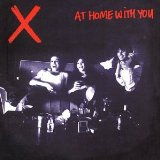
Affecting Albums - At Home With You - X

(Click on the links in the song titles to be taken to Spotify for a listen)

Ian Rilen, Steve Lucas and Cathy Green made up what was, for this reviewer, the definitive line-up of the iconic Aussie punk band X. Formed in 1977 by former Rose Tattoo bass player Rilen, X was known around the country as a hard rockin' live act - I remember one performance at the Prince of Wales Hotel in St. Kilda where Lucas got a nasty electric shock from his guitar - the reason being the crowd was "going off" to such an extent that their combined heat caused it to "rain" inside! For the record, Lucas finished the set, although obviously in a bit of pain - that's showbiz!

At Home With You, released in 1985, was the second album from X, after the 1979 release X-Aspirations. The album shows two sides to the band - the hard and fast and dirty punk sound that they were known for in their live act was certainly there, but there were also some softer songs, some with horns, which show that X was definitely not a one-trick-pony.

The highlight of the album for this reviewer is Degenerate Boy, a celebration of sorts of the (low) life of rock and roll, sex and drugs included. Ian Rilen's backup vocals add a touch of evil delight to such lines as "last week's dole cheque, up my arm it went". He was indeed a deeply dirty degenerate boy.

Other hard rockin' songs are the opening tune The Feel, with it's harsh guitar line and horn line, the thrashy Oxford St. Nick and Going Crazy showing why X has become an influence to many newer bands.

What is perhaps more surprising on this album are the more "straight-ahead" tunes - despite the throaty vocals and fast ending, Moving On is a classic pop song structure, All Over Now is a great rock tune, and Don't Cry No Tears is a moving love song, with a wonderfully haunting French Horn figure adding what could even be called beauty to this track.

There are some really great moments on this album - great songs, great licks, and great horns. Check it out.

At Home With You is available from iTunes in the original version, or a version with bonus tracks, or from Aztec Records, which is re-releasing lots of Australian Music from the 70s and 80s


Cheers for now, from
A View Over the Bell

Thursday, 24 February 2011

Affecting Albums - Warehouse: Songs and Stories - Husker Du

(Click on the links in the song titles to be taken to Spotify for a listen)

Husker Du were one of those "nearly but not quite" bands, whose reputation has continued to blossom long after their demise. Formed in Minnesota in the late 70s, by the late 80s they'd ceased to exist, but thankfully left a rich vinyl legacy for us to revel in.

They were one of the first underground acts to be signed by a major label, and although they didn't get the success they were after (or that they deserved), they paved the way for the transition of the alternative sound to the mainstream arena, along with other bands such as REM.

They are thought of by many as a punk / post-punk outfit, and while that was true for their early work, they quickly developed a keen melodic sense and pop feel, which sat just underneath their "wall of guitar" sound. Along with such other magnificently titled albums as Zen Arcade, Candy Apple Grey, and Flip Your Wig; Warehouse: Songs and Stories is a collection of fine pop and rock and roll tunes.

Warehouse was the last release from the band, as the tension between the two major songwriting talents in the unit, Grant Hart and Bob Mould had, by that stage, become unsustainable (the other member of the band, bassist Greg Norton did not write songs for Husker Du).

Perhaps because this was the band's final act, Warehouse comes in at a weighty 20 tunes, which makes it good value from the off - that a sizeable number are very good, and that a few are the best songs the band released, are the icing on the cake.

Fans familiar with Mould's later band Sugar will recognise the guitar sound on this album immediately - it's HUGE - which means this three piece never feels thin on the ground.

The many stand out songs on this album are headlined by Could you be the One?, a very catchy tune, with typical Bob Mould lyrics of personal confusion. Other great Mould penned tunes are Standing in the Rain, Ice Cold Ice, which has a great chorus, and Friend, You've Got to Fall, with it's great falling chorus melody that echoes the song's title.

Grant Hart kicks in with some pearlers to - Charity, Chastity, Prudence, and Hope, and You're a Soldier, with it's searing commentary ("...Can you tell me just how many did you kill today?"), Too much Spice, and She Floated Away, which is almost a folk song.

These few are just the highlights for me of the 20 tunes on this disc - so if you're interested in finding out more about a band that links punk to alternative rock, Warehouse: Songs and Stories is a fine entree into the world of Husker Du.

Warehouse: Songs and Stories is available from iTunes or from Amazon


Cheers for now, from
A View Over the Bell

Monday, 14 February 2011

Book Review - Louis Armstrong Special

Pops : a life of Louis Armstrong by Terry Teachout

Published in 2009 by Houghton Mifflin Harcourt ISBN 9780151010899

Louis Armstrong, in his own words : Selected Writings by Louis Armstrong

Published in 1999 by Oxford University Press ISBN 0195119584

My Dad is a Moldy Fig - that is, a traditional jazz purist. As I grew up and began learning to play the trumpet, I had access to Dad's great record collection, which was a comprehensive one covering New Orleans, Chicago and Dixieland Jazz. To my Father, that was all there was to Jazz, and the King of them all, Louis Armstrong, took pride of place in his collection, with a "book" of LP's chronicling his famous Hot Five and Hot Seven recordings from the 1920s. For quite some years I don't think I even realised that Armstrong had a performing and recording career that extended almost to his death in 1970, because according to my father's purist tastes, anything Armstrong did after the Hot Five/Seven era was not "real jazz".

So now, many years later, I am filling in the gaps in my Jazz education, and have used my Christmas break to settle down with a couple of books about (and by) the great man. Pops is billed as the first biography of Armstrong written by a musician - Terry Teachout is the drama critic for the Wall Street Journal,sometime Jazz Bassist and Librettist for Operas. A musician he may be, an Armstrong disciple he certainly is, which has both good and bad effects on his book.

(Pops was one of Armstrong's many nicknames, given to him because he struggled to remember people's names and often called people Pops. Other nicknames were mainly inspired by his mouth - Gate, Satchmo, short for Satchel Mouth and Dipper Mouth being just a few . A famous tune played by Armstrong is entitled Dippermouth Blues).

Pops is a comprehensive life of the great man, leavened by much recent research on Armstrong, and by newly accessible material created by him, both on tape and paper. The famous birthdate of July 4th 1900 is shown to be more than a year out of date, and the story of him getting his first cornet at the colored waifs home is also shown to be probably not true. Probably, because there remains the problem of Armstrong's own stories, which have created several versions of major events in his life, so tracking the true path can be tricky.

Teachout provides a good overview of Louis' early years, and throughout the book he is at pains to place Louis' story into the greater milieu of what was happening in US popular music and politics at the time. He also gives us an insight into just how incredible Louis' playing was at that time - we are used to bravura playing with lots of fast runs and high notes these days, but you only need to listen to some of the really early Jazz recordings, or to the playing of someone such as Bunk Johnson, to imagine what an effect Armstrong must have had when he burst onto the scene in the 20s.

Armstrong was famously seen to be somewhat of an Uncle Tom by some of the post-war Jazz players - Teachout tries to make the case that Armstrong was fighting for civil rights in his own way, but what comes out for this reader is of someone trying to make their own way in the world while not trying to bring trouble down on their backs. For a black man, especially before the war, that meant having a white man in your corner, and Joe Glaser, Louis' manager for many years, was his white man. Teachout shows that Glaser certainly was a pretty unsavoury character, with mob connections, but also manages to give us some idea of why they stayed together and formed such a successful partnership. One reason was certainly that Louis didn't like to change things in his life, so if something was working he left it alone. His deal with Glaser (a 50\50 split of earnings) seems horrifying now, but if Louis could be left alone to play, have enough money for some reefer and a Cadillac, he was happy.

He was happiest when playing and singing, and it seems he didn't mind too much what he played and sang. From the 30s on, he was happy to be guided by managers, producers and recording engineers to the songs he should record and play. This never seemed to worry Louis too much, but certainly exasperated many of his fans, who despaired at some of the saccharine he put out later in his career. Teachout tries to make the best of this era, and this is the weakest part of his book, as dross is dross, even when played by a genius.

Armstrong's battle with his lip is also fairly well documented - after first having trouble with his embouchure in the 1930's, Louis never fully regained his earlier power on the horn, and played less and sang more as his career moved on. As a fellow trumpet player, I'm sure that these problems would have weighed heavily on Louis' mind, and perhaps this, ironically, is why he'd set himself such punishing playing schedules, trying to make the most of what he had while it lasted, however short a time that might be. There is a revealing quote in the book, which I paraphrase here, where Louis says he never played at parties, because if someone banged into his horn you never knew how much damage you can do to yourself. Playing the trumpet can be likened to walking a tightrope - when you fall off, everybody knows about it.

An added value to Pops is all the apparatus at the end of the book - comprehensive notes, bibliography and a list of 30 "must listen" Armstrong recordings (all available on iTunes).

Teachout mentions on more than one occasion in his book that Armtrong is rare among major Jazz figures in that he has left a rich legacy of written and spoken word material in addition to his music. He often spent hours a day in correspondence, wrote two autobiographies and several other long autobiographical pieces.

Louis Armstrong in his own words is a fascinating insight into this material. It can at times be a little difficult to decipher the meaning in Armstrong's idiosyncratic writing style, which is wonderfully like hearing him speak.  His piece about his childhood years working for the Jewish Karnofsky family is reproduced here in full, and is a great insight into turn-of-the-century New Orleans, quite apart from the biographical information it provides (it is in this piece where Louis explains it was the Karnofskys who helped him buy his first cornet).

There is an interesting piece of autobiographical writing that expounds on Armstrong's love for Marijuana, as well as a very revealing letter to Joe Glaser talking about his regular paymets to his mistresses.

This book is well worth a look for anyone interested in Armstrong, and indeed anyone who has an interest in the American music scene in the 1920s, as it related to Jazz. The way it brings you closer to the man makes it a fine companion work to Pops.


Cheers for now, from
A View Over the Bell

Friday, 4 February 2011

Affecting albums - Blue Valentine - Tom Waits

(Click on the links in the song titles to be taken to Spotify for a listen)

Tom Waits is a man of many talents. Singer, songwriter, multi-instrumentalist and sometime actor, he has created a musical world all his own, which can be weird and wonderful at times. Even if you haven't heard him, you may have heard some of his songs sung by others, such as Jersey Girl or Downtown Train.

Tom Waits has a bit of a cult following, and I am a devotee - at last count I had 11 of his albums nestling in my iPod. Which brings me to the subject of this post - Blue Valentine.

In some ways this is the easiest entree into the world of Tom Waits and his music - Blue Valentine, while definitely quirky, is not quite as eccentric as some later albums - indeed it begins with a lushly orchestrated version of Somewhere, from West Side Story. The first indication that this might be something different is when you hear Tom's gravelly, husky voice - with a sound somewhere between Louis Armstrong and a lion's roar.

The rest of the album is a mix of bluesy tunes, and songs with a strong narrative lyric, such as Red Shoes by the Drugstore, Christmas Card from a Hooker in Minneapolis$29.00, and Romeo is Bleeding. These songs evoke the seedier side of life- hoodlums, wastrels and drug addicts. The instrumentation is sparse, loose and incredibly hip.

Waits' has a finely honed blues sensibility- his vocals are exquisitely timed, and delivered with a lot of soul.

The final song on the album- Blue Valentines, is a wonderful Jazz ballad, and a fine way to end what is truly a great record, that repays much listening.

Blue Valentine is available via iTunes, or at Amazon


Cheers for now, from
A View Over the Bell

Thursday, 25 November 2010

Affecting albums - Of Skins and Heart - The Church

(Click on the links in the song titles to be taken to Spotify for a listen)

The Church would have to be one of Australia's longest lived bands. Formed in 1980, they are still going strong today, with a sold out tour going on as I write this post. As with any band that has lasted 30 years, they have had high points and low points, changes of line-up, and an impressive 19 album releases.

Not quite pop, not quite new-wave, the distinctive guitar sound, harmonies and cryptic lyrics have led to The Church being in a genre of their own.

Of Skins and Heart is perhaps not their best album (for this reviewer The Blurred Crusade and Starfish would be two immediate contenders), but as a first album it had an electric effect on the Australian music landscape, and certainly made The Church a band to watch.

Highlights on this disc are The Unguarded Moment, which would have to be one of the finest pop songs to come out of Australia, Chrome Injury (although I've got no idea what the lyrics are about!), Is this where you live, and She Never Said.

Of Skins and Heart also started a not-so-good tradition for The Church, which lasted for quite a while, where the last song on the album is a bit of a dog. If you never hear Don't Open the Door to Strangers, you won't be missing much.

The Church were the precursor to a wave of jangly guitar bands coming out of OZ in the 80s and 90s - their influence has been huge, and it all started here.

Of Skins and Heart is available via iTunes, or at Amazon.


Cheers for now, from
A View Over the Bell

Saturday, 23 October 2010

Affecting albums - Night Train - Oscar Peterson

(Click on the links in the song titles to be taken to Spotify for a listen)

Oscar Peterson will need no introduction to jazz fans - one of the greatest jazz pianists to have ever lived, he was born in Canada, but soon came to the attention of music fans all over the world, through his brilliant and expressive playing. He played with almost everyone who was anyone in the jazz world, and surely deserves the epithet "jazz royalty".

The Oscar Peterson Trio, although the personnel changed over time, remains one of the best small combos in jazz, with the members having a high degree of understanding and empathy.

Night Train was a 1962 release from the Trio, which at that stage consisted of Peterson on piano, Ray Brown on bass and Ed Thigpen on drums. It was in fact one of the most successful album releases of Peterson's career, in terms of record sales.

Only one tune on the album - Hymn to Freedom - was written by Peterson himself, most of the other tunes are from other well known composers, such as Duke Ellington (Night Train), Hoagy Carmichael (Georgia on my mind) and Barney Bigard (C Jam Blues). No tune is much longer than five minutes, so this is not one of those jazz albums that has multi-chorus solos. It's tight and to the point.

This works well for Peterson, as he says so much with so few notes. The trio as a whole is seriously swinging on every track, with Thigpen nicely complementing Peterson's playing. In fact one of the highlights of this album is the rhythmic sensibilities of all three players - even on the slower numbers they manage to drive the song forward in a way that's sensitive to the mood of the tune, but still gets your feet tapping.

Peterson's mastery of his instrument is obvious. There is no "grandstanding", just excellent ideas performed with ultimate skill, and tied together in a very musical fashion. Given the trio format, Peterson is doing the lion's share of the work on the album, but that never gets in the way of what he's trying to say musically.

Highlights are the opening tune Night Train, Georgia on my mind (one of the best recorded version of this tune), and The Honeydripper, which really highlights Peterson's virtuosity and inventiveness, and the way he worked so well with the rest of the group.

I keep coming back to this album - once you hear it, I'm sure you will too.

Night Train is available via iTunes, or at Amazon.


Cheers for now, from
A View Over the Bell

Friday, 8 October 2010

Affecting albums - Calenture - The Triffids

(Click on the links in the song titles to be taken to Spotify for a listen)

The Triffids were one of the great Australian bands of the 80s. Like many bands from Down Under in that period, they almost, but not quite, made it to the big time. Again, like many of those bands, several songs they recorded have gone on to be Pop/Rock classics, but never hit the top of the charts at the time they were released. The tragic loss of lead singer David McComb at the early age of 37, ten years after the band's demise, means that we can no longer have a live experience of his magic as a singer and songwriter.

Calenture was The Triffid's fourth album in what was a prolific recording period for the band (three albums released in two years), and as it turned out was their penultimate recording. Somewhat of a departure from their previous sound, Calenture is full of lush orchestration, which suits not only the deep voice of McComb, but the sweeping lyrics of the tunes.

The two songs from the album that made an impact at the time are Bury me deep in love, which is a classic lush pop song, with strings and vocal harmonies lifting the chorus from the slightly plaintive verses. A real sing in the shower song, for mine. The other tune that made an impact was A trick of the light. While more lush than earlier work, this tune is much more like earlier Triffid's work such as Wide open road - sparse, evocative, with lyrics of lost love and what might have been. Again, the chorus is one you will whistle all day long.

The rest of the album is quite mixed musically - from the the simple bluesy Hometown farewell kiss, the stark and brooding Unmade love, and the just quirky Jerdacuttup man, a song about a body preserved in a peat bog for thousands of years.....

Calenture is one of those albums that you play on a spring Sunday afternoon and realise that the world is a beautiful place, even when sad things happen.

Calenture is available on iTunes, or Amazon.


Cheers for now, from
A View Over the Bell

Monday, 20 September 2010

Affecting albums - Takin' Off - Herbie Hancock

(Click on the links in the song titles to be taken to Spotify for a listen)

Albums can be great for many reasons - some create a magnificent statement as a whole, some can have one or two great tunes that will live forever, and some have a collection of great moments.

Takin' Off, Herbie Hancock's debut album, is great for all three reasons. As a whole, it is a magnificent showcase of jazz, with a front line that swings hard and blends perfectly together, playing some classic tunes. Both Watermelon Man and Driftin' are classic 60s jazz tunes, so cool and bluesy in their construction. And as for moments - Freddie Hubbard's solo on Watermelon Man has to be close to the most perfect solo ever captured on tape. From the opening moments of half-valve action, building to a magnificent crescendo and fall off at the end - a minute and a half of magic. Hancock's solo on Driftin' is also a masterpiece.

What makes this album so special is that none of the lead players seem out to prove anything. They are assured in their work, happy to let the music speak for itself without them imposing themselves on it. In particular, Dexter Gordon on tenor sax is very sparing with his notation, hardly any long quick runs, which helps to give the album it's assured laid back feel.

The sound of Freddie Hubbard's trumpet is simply mesmerizing for most of the album - in turns velvety, hard, ringing, and honey-like, you just can't will yourself away from it.

Even people who aren't necessarily jazz aficionados will enjoy this magnificent recording. I'm still trying to get Freddie's sound to come out of my horn - a noble but fruitless task.

Takin' Off is available on iTunes, or from Amazon.


Cheers for now, from
A View Over the Bell