Showing posts with label Australian Music. Show all posts

Wednesday, 8 January 2025

Will it be funny tomorrow, Billy? by Stephen Cummings

 Will it be funny tomorrow, Billy? by Stephen Cummings

Melbourne: Hardie Grant Books, 2009              ISBN 9781740666435

I've always been a Stephen Cummings fan. Whether its The Sports or his later solo work, not a month would go by in my household without listening to something he wrote or sang. Even my sixteen-year-old son has developed a liking for one of his songs (Perhaps). I knew he had written a couple of novels, but I'm not sure I knew he had written this memoir (or, "misadventures in music") so when I saw it for cheap in my local second-hand bookshop, I picked it up.

I'm glad I did - this is a no-punches-pulled dip into the life of someone who was (is?) neurotic, narcissistic, prideful, anxious, and also one of Australia's great pop stylists. It's a collection of stories in vaguely chronological order about things that happened to him on his journey through the Australian music industry. It is by turns cattish, wistful, bitter, funny, and accepting. The opening sentence gives a taste of what is to come - "At this stage in my life I don't need libel actions but what the hell."

What do we learn from Cummings' scribblings? That he had a fractious relationship with his family, that he was famously a moody perfectionist that was hard to get on with, and that he's had interactions with nearly everyone in Australian music in the 70s and 80s - from organising a party where Lobby Loyde vomited on Kym Bradshaw, to being groomed by the Chantoozies, driving a Tarago to Canberra with Jo Camilleri, having a stand-up fight with Steve Kilby during a recording session, having a long-running feud with Michael Gudinski, being chauffeured around LA and annoying Billy Joel (the title of the book is a reference to that), and sharing other not-so-nice pieces of gossip (although not about Renee Geyer, as he "had to live in Melbourne with her"...). It's also a paean to those long-lost Melbourne venues and restaurants that made the city a great place to be in the 1970s and 80s, even though we didn't realise it at the time.

This is a fascinating book, and well worth reading for people of a certain age who love their pop music.


Cheers for now, from

A View Over the Bell

Wednesday, 6 December 2017

Book Review - Grant & I by Robert Forster

Grant & I : inside and outside the Go-Betweens by Robert Forster

*Hamish Hamilton, 2016                  ISBN 9780670078226

The recently released and highly regarded documentary Right Here by Kriv Stenders has brought me back to The Go-Betweens, and to this book. I've had an arms-length relationship to The Go-Betweens and their music. In fact I began listening to them in a back-to-front fashion, as I was fairly lukewarm about them until I was blown away by Grant McLennan's album Watershed, which led me back to re-evaluate The Go-Between's output, with a better understanding of how I reacted to their songs. Basically, I'm a Grant man, not so much a Robert fan.

It is the combination of Forster and McLennan, and arthouse and pop, which is the reason that The Go-Betweens never cracked it for the big time, but why their albums will stand the test of time. The duelling tendencies of art and pop meant that many Go-Betweens albums were a mish-mash, with a potential Top 40 hit followed by a sparse, obscure song about a Russian novelist. It was an approach that gave the songwriters their head, but didn't bring  the commercial success they needed.

There is a pleasing naivety in Forster's book about the rock star potential of the band. During both iterations of the band (1977-1989 and 2000-2006) he writes of how the next album would be the one that broke them properly. That it never happened was partly down to the quirkiness of the music, and partly due to the self-destructive tendencies of the band itself.

A portion of that destructiveness came down to the influence of Lindy Morrison. Drawn into the band after she became Forster's lover, she (inadvertently) cruelled their first stint at success in the UK because Forster couldn't bear to be away from her, so he returned to Australia just as they were beginning to make headway. Morrison's anarchic influence and anti-mainstream attitude also damaged the band's sound and presentation at times, veering them away from any opportunity for more mainstream success. Forster is quiet on a lot of this in the book, as he is on McLennan and Amanda Brown's time as a couple. He deals gently with all ex-bandmembers, perhaps more so than he should have.

Grant & I is more a journey through Forster's feelings, from the idealistic beginnings of The Go-Betweens through the drudgery of years on the road, to the excitement of the re-formation, through to the trauma of Grant's premature death. The book is a tender evocation of Grant. Ever the gentleman, a product of boarding school (Forster too attended a top private school, and both were very good schoolboy cricketers), he and Forster did not usually discuss emotions: in fact at times during the book Forster has to dig into McLennan's lyrics to glean his co-writer's feelings.

Little did either Forster or McLennan know what a dramatic effect on their lives their decision to terminate The Go-Betweens in 1989 would make. For Forster it brought on a time where his life changed for the better, with marriage, kids and sobriety bringing him a new happiness. For McLennan, the decision was a disaster, signalling the end to his relationship with Brown, which took him the best part of a decade to get over. Forster charts McLennan's descent into depression and drinking with the tenderness and helplessness that only a good friend could display.

The reformation of The Go-Betweens seemed to suggest a turn in the fortunes of their musical endeavours, at least, with the band now recognised as an important part of pop history, and a new phase in the Forster/McLennan songwriting partnership foreshadowing a new level of music. Grant's death took all that away.

Forster mentions a few times in the book that he likes reading biographies of artists and musicians to try and achieve an insight into what makes them tick - he is also unashamedly as much of a fanboy as the rest of us, with moving and funny descriptions of meeting people or going to places that are important to his artistic growth. When it comes to describing his own art, he shows us yet again not only how hard it is to describe a creative process, but how hard it can be to divorce oneself and judge critically. He shows us that the criticism of each others work was a vital part of the Forster/McLennan songwriting relationship (wouldn't it be fascinating to read McLennan's take on Forster's view of The Go-Betweens work, and indeed his solo oeuvre). There is much that I disagree with in Forster's description of his own, McLennan's Go-Between work, and indeed McLennan's solo albums, but his descriptions are a valuable record of how a creator feels about his work, both at the time and viewing from a distance.

McLennan appears through the pages of this book as a boy somewhat lost in the World; a boy with a great gift that he tries to use for good, but which crucially let him down at a key point in his life. Forster comes out as someone who for much of his life was trying to be someone else, before finding himself. Along the journey some truly great music was made and recorded. This book is not a warts-and-all uncovering of dirty laundry, it is rather a considered and distilled evocation of a friendship, a partnership, and a band.

Well worth reading.


Cheers for now, from
A View Over the Bell

* This is the first time ever, in a 25 year career to do with books, that I have come across a book with no place of publication printed anywhere. I hope it's not a precursor of things to come.

Tuesday, 28 June 2016

Affecting Albums - Come Home for Autumn by Anthony Atkinson

Come Home for Autumn by Anthony Atkinson

Candle Records   2003

(If you have a Spotify account, clicking on the links in the song titles will take you to that track)

Candle Records flickered out somewhere about 2007, and what a loss to Indie Pop it was. The Melbourne-based label was home to artists such as The Lucksmiths, Darren Hanlon,, The Mabels, The Guild League, The Small Knives, and the list goes on. Each of these acts were lyrically rich, and produced fantastic pop tunes that can rapidly become tunes to live your life by as you can't help humming them again and again.

One of the stalwarts of the label was Anthony Atkinson, both as a solo performer and with The Mabels. Come Home for Autumn was his first solo album, and what a great debut it was.

Ranging from very spare guitar to rock tinged with feedback, each song takes us on a journey into love, work, and life in the inner city in the early 2000s.

Atkinson's delivery is often laconic, and his at times ironic lyrics, merging sometimes into lament, are showcased on "City of Crime", with it's wonderful slightly drunken summer afternoon drum beat and strumming, finishing with guitar picking into the sunset.....

"Sidestep" is a wonderfully simple sung duo on the difficulties of communication between men and women, underlain again by guitar.

The highlight for me from this album though is the rock-out track "Rediscover Me", with its simple pounding rhythm and feedback inspired guitar and lyrical fantastic-ness -

"Don't stay in London
Come home for Autumn
Like the trees,
I promise to be at my best

And I'm a firm believer
That our team's the season's sleeper
And I wanna know
Are you comin home for the parade
I wanna know will you be standing with me?"

........................

"But still I wait
Until you're over overseas
And I wait
For you to re-discover me"

This record is a little gem, and yet again a lesson in the truism that simpler is often better when it comes to pop music.

Worth re-discovering!

Come Home for Autumn is available on iTunes, Spotify, and from Plastic Viking Helmet Records, who also stock many other ex-Candle Records artists.


Cheers for now, from
A View Over the Bell

Wednesday, 23 March 2016

Book Review - Who wrote the ballads? : notes on Australian Folksong by J.S. Manifold

Who wrote the ballads? : notes on Australian Folksong by J.S. Manifold

Sydney: Australasian Book Society, 1964

John Manifold was a committed Communist, and that informed most all he did and achieved. This fact certainly informs this work, and is both its strength and weakness.

When Manifold returned from England after the War, he began a process of collecting the old bush songs, to recapture the original voice of the lower classes. Manifold himself had heard some of these songs as a youth in the 1920s, as -ironically given his views- he was the son of one of the great pastoralist families of Victoria's Western District and listened to the shearers and other station workers sing in the evenings.

Manifold has applied his musicological and historical brain to the question of where and how the traditional songs originated and produced an interesting book about many of Australia's famous songs. After a short opening that shows how ballads developed in the old countries, Manifold looks at what remains of the earliest Australian folksongs, which are often incomplete or bastardised. He is correct in his description of why they only survived that condition: the ruling classes of the early colony had no interest in folksong, as they were producing and consuming more "literary" verse and song, and the folksongs were for the great part what Manifold calls "treason" songs. These songs may have included songs and ballads that had been banned in England, and soon came to include local songs with lyrics that would have been dangerous to commit to print, or indeed sing in public.

As the convict era passed, many of these songs passed too into history, to be replaced by bushranger ballads, which Manifold goes into in some detail, comparing the differing versions now extant of the Ben Hall Ballads and Bold Jack Donahoo and showing how both the words and the tune changed as the ballads progressed through both space and time.

At the same time those that lived and worked on the great homesteads and squatter's runs were singing their own ballads. The stations had their own hierarchy, with the owner or manager at the top playing and singing town tunes, the jackaroos, who would sing theatrical songs and were heavily influenced by Gordon and those that followed, and then the working men - shearers and shepherds - from which many of the true Australian folksongs sprung. Manifold shows well how these men took old Irish, Scottish and British tunes and ballads and made them their own.

The next third of the book is taken up with the Australian literary ballad. Manifold is unsure why the ballad form became such a staple of Australian poetry, but points to Gordon as the progenitor of the form, moving through to Paterson as its greatest exponent. Interestingly, given his outlook, Manifold thinks much more of Paterson than Lawson; not only as a poet, which is fair enough, but as a "representative" of the labouring classes, which Paterson really wasn't. Lawson, as a "representative" of the selectors, wrote more of the hardships of being on the bottom of the heap, although to be fair to Manifold, Lawson's best writing was prose and so does not fall within the purview of this book.

The last section of the book deals with the current (as at the early 1960s) state of ballads -  Manifold railing against the influence of those who would "commercialise" the singing of the old songs - and with the future of folk music - Manifold believing that only a socialist realignment of society would regenerate the esprit de corps that would be needed for these types of tunes to be generated anew. This section verges on propaganda, expounding the excellence of Chinese cultural policies (!), and not adding to the earlier sections of the book.

Despite such personal quirks, Who wrote the ballads? is an interesting look at early Australian poetry and folksong, and worth digging out for those interested in the subject.


Cheers for now, from
A View Over the Bell


Tuesday, 7 February 2012

Affecting Albums - Snappy Too - James Morrison

Snappy Too - James Morrison

(Links on tracks take you to Spotify to have a listen)

For those of you who are musicians, you have no doubt had the experience of playing in a band and not enjoying how one of the other players has played a part - be it that they can't nail it, or their feel is all wrong. You privately seethe, or you might have a chat to them about it, but that's about all you can do - unless you're James Morrison. Then you can have a 17 piece big band that plays exactly how you want it, because (apart from the drummer) all the musicians are you!

James Morrison will need no introduction to many readers - an Australian Jazz musician of wonderful proficiency across a wide range of styles and instruments, who plays gigs ranging from concerts with Brass Bands through to bop in smokey basements, there is almost nothing he hasn't done since his first professional gig in his teens.

In 1990, with the help of three friends Jeff Hamilton (drums), Ray Brown (bass), and Herb Ellis (guitar), he recorded an album of big band pieces, where he (Morrison) played all the piano, brass and woodwind parts - this album was entitled Snappy Doo. As he writes on the liner notes of the album under review, he always had in his mind that he would one day record another album along the same lines - and with Brown and Ellis now unfortunately no longer with us, Morrison himself has taken up guitar and bass, and, along with Jeff on drums, Snappy Too is now with us.

The album is a collection of original pieces (written by Morrison) and standards such as All of me, Up a Lazy River, and Someday my Prince Will Come. This last piece is played on a Bass Trumpet designed by Morrison and built by the craftsmen at Schagerl brass instruments. Morrison also plays another of his designs, a rotary-valved trumpet with a piston-trumpet length lead pipe called The Raven, in Zog's Jog, which is a wonderful high energy big-band showpiece. This makes Morrison the Jack Brabham of musicians in my opinion (and with Morrison being an absolute motor-head, I'm sure he'd understand the allusion).

The initial "wow" factor of Morrison playing 16 instruments soon wears off as the album gets going. Morrison is such an exciting and energetic player that you find yourself relishing the music and forgetting how it's made, which is as it should be. High trumpet playing is what Morrison is known for, and there is plenty of top-notch screaming, but what is noticeable in a few of the pieces here, such as my personal favourite The Call, is his fine sense of building a solo, from a sometimes low and soft start, building the energy and excitement to a fever pitch before the rest of the "band" kicks in with a killer riff.

As expected, the trombone playing is top notch, but another highlight for me is No Regret, a slower moodier piece, where Morrison solos on tenor sax and sounds very Stan Getz-ish. Nice.

For a change from the classic big band style Sad Blues uses a trad-jazz line up of trumpet, trom, clarinet, banjo and washboard, with plenty of flutter-tongued and plunger-muted trumpet to add to the trad feel.

If you like Jazz, if you like exciting playing, if you like Big Band music, and if you like music that SWINGS, then Snappy Too is well worth checking out.

Snappy Too is available via iTunes, or direct from www.jamesmorrison.com (where he also has a clever video clip of Zog's Jog)


Cheers for now, from
A View Over the Bell

Tuesday, 3 January 2012

Book Review - Blowing my own trumpet by James Morrison

Blowing my own trumpet by James Morrison
Sydney: Pier 9, 2006               ISBN 9781740458788

James Morrison would definitely be Australia's best-known home-grown Jazz musician. He is also well known as a raconteur and sometime TV presenter. Blowing my own trumpet is not really an autobiography as such, more a collection of vignettes recalling moments of a life.

As such, this book is a very easy read, and good for a laugh or two at the crazy adventures of James and his brother John (with Christian names like that, it's no surprise to find that their father was a preacher). The stories of trumpet and trombone playing are almost upstaged by the stories of boating - including living on boats both in Sydney Harbour and in New York, and nearly dying sailing across the Tasman Sea.

The stories of gigs around the world mostly focus on the mistakes, like turning up and playing with the wrong band, or hearing your own band live on the radio playing a gig while you're driving over the Harbour Bridge.

If you are looking for a description of the musical life, or a technical insight into trumpet playing or jazz music, this is not the book for you. If you like an amusing read for a sunny afternoon, you could do worse.


Cheers for now, from
A View Over the Bell

Monday, 9 May 2011

Affecting Albums - Endangered Species - Galapagos Duck

Galapagos Duck would be counted as one of Australia's best-known jazz bands (which may not be saying that much, in truth). With a constantly changing personnel, they have been in existence since 1969, when the original members got together to play some gigs in the NSW snowfields during ski season.

Since then the band has travelled a long musical road through most spectra of the jazz idiom, owing to the eclectic strengths of various members of the band. Their sound is unique, partly owing to their wide-ranging use of idiom, and the fact that over time most members of the band have been multi-instrumentalists, which means that in any one night or recording the line-up of instruments can change from tune to tune.

Endangered Species was released in 1985, in aid of the World Wildlife Fund. I suppose in some ways it could be termed a concept album, in that the songs are about specific endangered species, or wildlife in general, with one song about the Greenpeace organisation.

As with most albums created around a concept, there are high points and low points in this recording. In fact quite often it is the grooves that stand out, rather than the tunes as a whole. The riff in Hindsight is very catchy, the groove in China Bear is good, (the lyrics aren't!), Living Planet has a great funk feel, and Grizzly Bear is a classic R'n'B type groove.

There are also some tunes here that hark back to traditional jazz, Wombat Walk being one of them. All the instrumentalists are top notch, with especially good trombone playing - in fact a few of the tunes feature a frontline of trombone and tenor sax, which perhaps shouldn't work as well as it does, given they are playing in the same voice.

The album is let down by it's lyrics - four tunes are sung, and the lyrics are trite, which is a shame, as they make this album less than the sum of it's parts.

The reason I've included this album is here is that it is a great introduction to jazz - many styles are here, the improvisation is good and easy to follow, and the grooves get into your head.

Unfortunately at the time of writing this post Endangered Species is not available except on the second-hand market, which is a shame, as it is an interesting document of Australian Jazz.


Cheers for now, from
A View Over the Bell

Tuesday, 15 March 2011

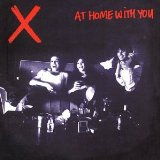
Affecting Albums - At Home With You - X

(Click on the links in the song titles to be taken to Spotify for a listen)

Ian Rilen, Steve Lucas and Cathy Green made up what was, for this reviewer, the definitive line-up of the iconic Aussie punk band X. Formed in 1977 by former Rose Tattoo bass player Rilen, X was known around the country as a hard rockin' live act - I remember one performance at the Prince of Wales Hotel in St. Kilda where Lucas got a nasty electric shock from his guitar - the reason being the crowd was "going off" to such an extent that their combined heat caused it to "rain" inside! For the record, Lucas finished the set, although obviously in a bit of pain - that's showbiz!

At Home With You, released in 1985, was the second album from X, after the 1979 release X-Aspirations. The album shows two sides to the band - the hard and fast and dirty punk sound that they were known for in their live act was certainly there, but there were also some softer songs, some with horns, which show that X was definitely not a one-trick-pony.

The highlight of the album for this reviewer is Degenerate Boy, a celebration of sorts of the (low) life of rock and roll, sex and drugs included. Ian Rilen's backup vocals add a touch of evil delight to such lines as "last week's dole cheque, up my arm it went". He was indeed a deeply dirty degenerate boy.

Other hard rockin' songs are the opening tune The Feel, with it's harsh guitar line and horn line, the thrashy Oxford St. Nick and Going Crazy showing why X has become an influence to many newer bands.

What is perhaps more surprising on this album are the more "straight-ahead" tunes - despite the throaty vocals and fast ending, Moving On is a classic pop song structure, All Over Now is a great rock tune, and Don't Cry No Tears is a moving love song, with a wonderfully haunting French Horn figure adding what could even be called beauty to this track.

There are some really great moments on this album - great songs, great licks, and great horns. Check it out.

At Home With You is available from iTunes in the original version, or a version with bonus tracks, or from Aztec Records, which is re-releasing lots of Australian Music from the 70s and 80s


Cheers for now, from
A View Over the Bell

Thursday, 25 November 2010

Affecting albums - Of Skins and Heart - The Church

(Click on the links in the song titles to be taken to Spotify for a listen)

The Church would have to be one of Australia's longest lived bands. Formed in 1980, they are still going strong today, with a sold out tour going on as I write this post. As with any band that has lasted 30 years, they have had high points and low points, changes of line-up, and an impressive 19 album releases.

Not quite pop, not quite new-wave, the distinctive guitar sound, harmonies and cryptic lyrics have led to The Church being in a genre of their own.

Of Skins and Heart is perhaps not their best album (for this reviewer The Blurred Crusade and Starfish would be two immediate contenders), but as a first album it had an electric effect on the Australian music landscape, and certainly made The Church a band to watch.

Highlights on this disc are The Unguarded Moment, which would have to be one of the finest pop songs to come out of Australia, Chrome Injury (although I've got no idea what the lyrics are about!), Is this where you live, and She Never Said.

Of Skins and Heart also started a not-so-good tradition for The Church, which lasted for quite a while, where the last song on the album is a bit of a dog. If you never hear Don't Open the Door to Strangers, you won't be missing much.

The Church were the precursor to a wave of jangly guitar bands coming out of OZ in the 80s and 90s - their influence has been huge, and it all started here.

Of Skins and Heart is available via iTunes, or at Amazon.


Cheers for now, from
A View Over the Bell

Friday, 8 October 2010

Affecting albums - Calenture - The Triffids

(Click on the links in the song titles to be taken to Spotify for a listen)

The Triffids were one of the great Australian bands of the 80s. Like many bands from Down Under in that period, they almost, but not quite, made it to the big time. Again, like many of those bands, several songs they recorded have gone on to be Pop/Rock classics, but never hit the top of the charts at the time they were released. The tragic loss of lead singer David McComb at the early age of 37, ten years after the band's demise, means that we can no longer have a live experience of his magic as a singer and songwriter.

Calenture was The Triffid's fourth album in what was a prolific recording period for the band (three albums released in two years), and as it turned out was their penultimate recording. Somewhat of a departure from their previous sound, Calenture is full of lush orchestration, which suits not only the deep voice of McComb, but the sweeping lyrics of the tunes.

The two songs from the album that made an impact at the time are Bury me deep in love, which is a classic lush pop song, with strings and vocal harmonies lifting the chorus from the slightly plaintive verses. A real sing in the shower song, for mine. The other tune that made an impact was A trick of the light. While more lush than earlier work, this tune is much more like earlier Triffid's work such as Wide open road - sparse, evocative, with lyrics of lost love and what might have been. Again, the chorus is one you will whistle all day long.

The rest of the album is quite mixed musically - from the the simple bluesy Hometown farewell kiss, the stark and brooding Unmade love, and the just quirky Jerdacuttup man, a song about a body preserved in a peat bog for thousands of years.....

Calenture is one of those albums that you play on a spring Sunday afternoon and realise that the world is a beautiful place, even when sad things happen.

Calenture is available on iTunes, or Amazon.


Cheers for now, from
A View Over the Bell

Monday, 13 September 2010

Affecting Albums - Gossip - Paul Kelly and The Coloured Girls

(Click on the song titles to have a listen to them on Spotify)

Number 2 in the series of Affecting Albums falls to Paul Kelly and the Coloured Girls, and their album Gossip (1986).

This was the second album that Paul Kelly released, after 1985's acoustic effort Post. In fact, four songs from his first album made it onto Gossip, getting the "full band" treatment. The mid 80's was a golden age of live music in Melbourne, and Paul Kelly was an integral part of the scene that was then developing.

Gossip marks the true start of Kelly's recording career, in that it set his style as a singer/songwriter who is at his best telling stories through song, and who sings songs very redolent of place. Most songs on Gossip are straightforward pop, but their lack of cliche, and the way they spoke directly to audience's life experiences proved instantly popular, and since this album Kelly has never looked back, to become the Australian music icon he is today.

The album has many highlights - the quintessential Melbourne song Leaps and Bounds, with the classic opening verse -

I'm high on the hill
Looking over the bridge
To the M.C.G.
And way up on high
The clock on the silo
Says eleven degrees

I remember...

To Victorians of a certain age these lines bring back images that remain as vivid today as they did 25 years ago. Sydney was not forgotten either, with another classic song, Randwick Bells.

There was an early sign of Kelly's concern with Aboriginal affairs in Maralinga (Rainy Land) a haunting and effective evocation of Aboriginal suffering connected with the atomic tests in Australia in the 60s. This song is musically the most unusual, with a droning monotone effect that piles on the pressure until the final ironic verse -

they said do you speak English?
he said
I know that Jesus loves me I know
because the bible tells me so

While these three songs may be what I remember first off, it would be remiss not to mention Before too long, and Darling it Hurts, which became the hits from the album, and had wide radio play.

Another factor in the brilliance of this album was it's size - depending on the version purchased, you got 20 or 24 songs for the money, and not a bad one among them.

Gossip (the full 24 song version), is available on iTunes. Check it out.


Thursday, 26 August 2010

Affecting Albums - Eternally Yours - The Saints

(This is the first post in a series that I hope will develop into a list of all the albums that have gone into making my musical world. They will cover a pretty wide range of styles, and I hope that each post will describe a bit about the album, and why it has affected me enough to write about it.)

(Click on the song titles to have a listen to them on Spotify)

Eternally Yours (1978) was the second album released by the classic and, dare I write it, seminal Australian punk band The SaintsThe Saints' rejection to being pigeonholed, by developing a much fuller sound on Eternally Yours than the straight-ahead guitar-punk sensibility of their first album, I'm Stranded, ensured that they will be remembered as one of the great bands in Australian music. Ironically, it also ensured that they would never again live up to the popularity in punk circles that I'm Stranded had given them.

Lyrically the album is very strong, coursing with lead singer Chris Bailey's cynicism and anger at the world, fueled by his tough Brisbane upbringing.

The opening song, Know Your Product is perhaps THE best punk song ever recorded. From the classic and instantly recognizable opening brass riff, to the caustic anti-advertising lyrics, viz. the chorus below -

"Cheap advertising, you're lying
Never gonna give me what I want
I said smooth talking, brain washing
Ain't never gonna give me what I need"

It packs a punch that knocks you senseless.

What makes this the one of the best punk albums of all is the variety in the songs. Acoustic guitar, harmonica, and the brass section all help to lift it out of the punk ruck, but the fact that all the songs SWING is what makes it a truly great album. With all that, it never loses the hard sensibility that Bailey's lyrics bring to it, at their harshest in denigrating their own followers and the music scene in general in International Robots. It was this attitude, rejecting any sort of slavish following, which led to the punk movement turning on them, and after one more classic album Prehistoric Sounds, the original band split up, with Ed Kuepper going his own way to form The Laughing Clowns, while Bailey held on to the name, and The Saints began a metamorphosis into a very good indie band.

Songs such as A Minor Aversion and Untitled, acoustic, but with a hard driving edge, were before their time, predicting much that would happen in the independent music scene in the 80's and 90's

Rolling Stone Australia has Eternally Yours at number seven in their top 50 Australian albums - it's certainly in my top ten. You can check out Eternally Yours on iTunes, or Amazon.


Cheers for now, from
A View Over the Bell